
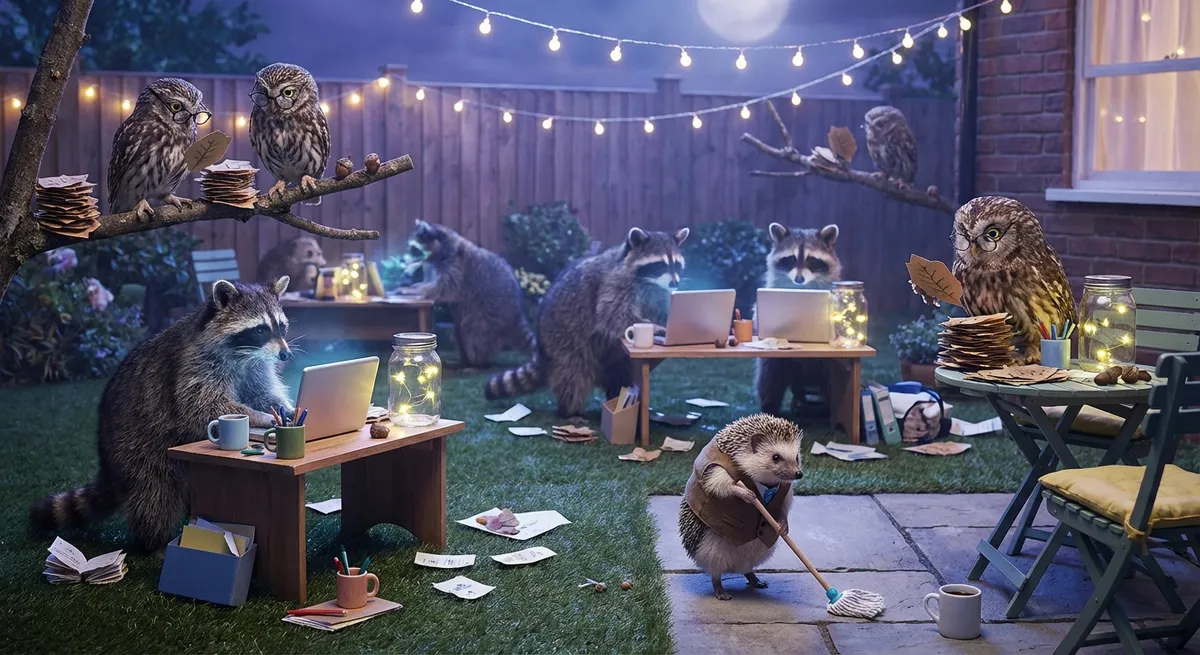
You think animals just vibe, nap, and occasionally star in Pixar movies. Meanwhile, the entire animal kingdom is out here running a full-time soap opera, night shift, and chaotic startup ecosystem while we’re doomscrolling in bed.
This is your backstage pass to the hidden lives of “normal” animals doing extremely un-normal things. Read this, and you’ll never look at a pigeon, goat, or goldfish the same way again. Share it so your friends stop underestimating ducks.
Plot Twist: Pigeons Are Better At Maps Than You
You: “I got lost in my own neighborhood with Google Maps.”
Pigeons: “I just flew 600 miles home using the Earth’s magnetic field and vibes.”
For real: homing pigeons can navigate from unfamiliar places over hundreds of miles, and scientists think they use a combo of sun position, smells, low-frequency sounds, and possibly magnetic fields. That’s right—your local sidewalk bird might have a built-in compass, GPS, and weather app, all running on breadcrumbs.
These sky potatoes have been used for centuries to deliver messages in wars, carry tiny cameras for aerial spying, and allegedly help with emergency communications when tech fails. Meanwhile, we panic when our phone hits 3% battery.
So the next time you see a pigeon doing “nothing” in the park, understand: it’s basically an off-duty delivery drone with wings, waiting for its next mission. Respect the loaf.
Goats Can Low‑Key Judge Your Taste In Music
Some animals just exist. Goats, on the other hand, are out here forming opinions.
Studies have shown that goats can recognize human emotional expressions and even respond differently to our moods. They prefer happy faces over angry ones and will literally walk toward the person who looks more chill. They also remember which humans treated them kindly—and which ones didn’t. Yes, the goat remembers that one time you chased it for a selfie. You are on a list.
On top of that, goats can learn to use touchscreens. Imagine a farm full of goats quietly unlocking your phone, changing your Spotify playlist, and liking their own photos.
So if you ever feel a goat staring at you a little too intensely, it might not be random. It might be evaluating your entire personality, your energy, and your outfit. Farmyard judgment has entered the chat.
Octopuses Are Escape Artists With Supervillain Résumés
Octopuses are what happens when you give a squishy bag of jelly eight arms, three hearts, blue blood, and a genius-level IQ.
Aquariums report them:
- Unscrewing jar lids from the inside
- Sneaking out of tanks at night, eating neighboring fish, and returning before morning
- Memorizing human faces (including the people they do not like)
- Rearranging objects just because they’re bored
One famous octopus, “Inky,” reportedly escaped from New Zealand’s National Aquarium by slipping through a gap in his tank, crawling across the floor, and disappearing down a drain pipe to the ocean. That’s not an animal, that’s a prison break movie.
They also camouflage so well they can match colors and textures, turning into rock, coral, sand, or “absolutely not here, officer.” If aliens visited Earth and asked, “Take us to your smartest resident,” scientists would have to awkwardly gesture toward a wet noodle with tentacles.
Ducks Are Running Secret Social Experiments
Ducks look cute, quack loud, and waddle around like they’re wearing invisible Crocs. But underneath that chaos, they’re running extremely serious life strategies.
Ducklings have this wild ability called imprinting: within hours of hatching, they decide who “mom” is—and then follow that being like a tiny feathery cult. It can be an actual duck, a human, a random animal, or in lab conditions, even a moving object. Somewhere out there, a baby duck once decided a pair of boots was its parent and committed emotionally.
They also sleep in rows, and the ducks on the edges keep one eye open to watch for danger while the ones in the middle fully knock out. Edge ducks can literally sleep with half their brain awake and half asleep. That’s advanced squad strategy and energy management.
Meanwhile, we can’t fall asleep unless the room is dark, the fan is on level 2.5, and the blanket is exactly 37% over one leg.
Your Goldfish Might Remember More Than Your Last Three Passwords
The “goldfish have 3-second memory” thing? Completely fake. Your fish has been slandered.
Research shows goldfish can remember things for months. They can be trained to:
- Swim to specific locations for food
- Tell shapes apart
- Respond to different music
- Perform simple tasks on cue
Experiments have even shown goldfish learning to hit a lever at a certain time of day to get food. That means they can link time, action, and reward—basically running a tiny, wet version of a daily schedule.
So when your goldfish swims up to the glass every time you walk by, that’s not randomness. That’s “Oh good, the giant snack machine has arrived.” If it had thumbs, it would absolutely be ordering treats from Amazon.
Conclusion
Animals are not just background characters in the human show—they’re running complex social systems, prison escapes, emotional intel, and navigation techniques that put us to shame.
Next time you see a pigeon, goat, duck, octopus meme, or a humble goldfish, remember: they might be living richer, weirder lives than we are. Share this with someone who still thinks animals are “just cute” and not actively outsmarting us on a daily basis.
Sources
- BBC Future – The mysterious magnetic sense of animals - Explains how animals like pigeons navigate long distances using environmental cues
- National Institutes of Health – Goats prefer happy human faces - Research article on goats recognizing and preferring positive human emotional expressions
- Smithsonian Magazine – Octopus Escapes From New Zealand Aquarium - Report on the real-life escape of Inky the octopus
- National Geographic – Why ducklings follow their mother - Discussion of imprinting behavior in ducks and how it works
- The University of Plymouth – Goldfish memory research - Study showing goldfish can learn and remember tasks over time