
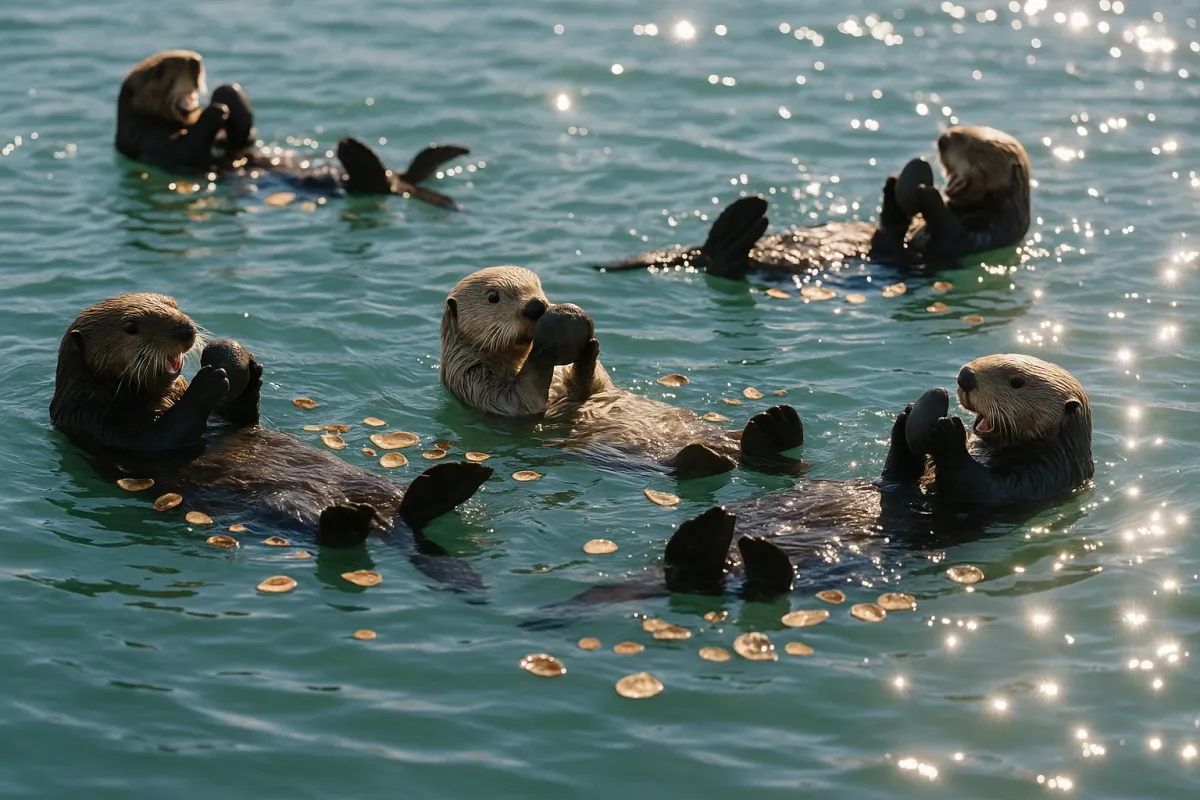
Somewhere off the coast of California right now, a wild sea otter is clacking shells together like it’s auditioning for Top Chef: Pacific Ocean Edition—and scientists are losing their minds in the best way. A new study on wild sea otters just dropped (from UC Santa Cruz and friends), and it basically confirms that these fuzzy chaos nuggets have entered the Stone Age: they’re using tools, they’ve got preferences, and yes, they’re passing that knowledge down like weirdly damp grandparents.
If you thought “otter using a rock” was just a cute TikTok moment, congrats: you accidentally watched cultural evolution in real time.
Here’s why this very real, very current science story is the best thing on the internet today.
1. Wild Otters Have Officially Unlocked “Grandma’s Secret Recipe,” But For Rocks
Researchers studying wild sea otters along the California coast just showed that shell-cracking techniques don’t just appear in random otters—they’re learned and passed down. As in: one otter figures out a clever way to smash clams, and its kids copy the move like a family recipe for garlic bread, except the bread is a mussel and the garlic is… seaweed.
Even better, female otters—the ones doing most of the foraging while also raising pups—seem to be the main culture carriers. They teach the tiny fluff potatoes how to select the right rock, how to balance food on their belly, and how to whack it just right. So yes, somewhere out there is an otter mom thinking, “We do NOT use that rock in this family, Timothy. That’s a barnacle rock.”
This isn’t just adorable; scientists say it’s an example of animal culture in the wild, right now, not in a documentary with dramatic violins. Your grandma had her “good pan.” These otters? They’ve got their “good rock.”
2. Individual Otters Have A “Signature Style” Like Little Aquatic Influencers
The new research shows that wild sea otters don’t all crack shells the same way. Some are rock-pounders. Some use their chest as a built-in anvil. Some grab hard-shelled snacks and slam them against actual boulders like they’re rage-quitting a video game.
Each otter ends up with its own recognizable tool-using style, and scientists can literally identify individuals by their “smash aesthetic.” Imagine getting recognized by your personal technique for opening a jar. That’s these guys—but with clams.
And just like human influencers, their style spreads. Young otters copy the specific moves they see most often. If mom uses a “belly slam, three taps, flip, repeat” method, the kid learns that too. Somewhere right now there’s an otter watching another otter like, “Wow, she just drops the snail? That’s so minimalist. I could never.”
Congrats, you now live in a world where sea otters have more consistent personal brands than half of Instagram.
3. Their Tool Use Is So Intense It’s Literally Changing The Rocks
Not metaphorically. Not spiritually. Physically.
Scientists visiting otter foraging spots found “anvil stones” covered in tiny pits and dents, formed purely from years of otters smashing shells on them. We are talking about wild animals leaving behind archaeological sites. Yes, we now have otter archaeology.
Future scientists might uncover a pitted rock and go, “Ah yes, the Sea Otter Smash Culture Layer, estimated to be 2020s, right around the time humans were also pounding things—mostly energy drinks.”
This is the same kind of evidence we use to track early human tool use. Stone marks. Repeated patterns. “This rock has clearly seen things.” Only now, our new Stone Age kings are fluffy, buoyant, and frequently photographed lying on their backs like tiny, wet, disappointed dads.
4. Otter Culture Could Decide Which Shellfish Survive (So Yes, They’re Basically Restaurant Critics)
Here’s where this gets unexpectedly savage: otters don’t hit everything equally. They’re picky. They target certain shellfish more based on what they can open with their personal tool style, how much energy it takes, and probably whether it sparks joy.
The study suggests that these learned foraging behaviors might shape entire coastal ecosystems. If a local otter community gets really into “smash crabs with rocks” culture, crab populations feel the heat. If another group prefers mussels, guess who’s suddenly not thriving.
So the menu choices of a few hundred floating fuzzballs can literally tilt the balance of the intertidal world.
You: “What should I eat today?”
Sea otter: “My rock and I are about to restructure this bay’s food web, thanks.”
Some conservation scientists are now watching otter tool culture as part of ecosystem management. Translation: your favorite viral otter video may also be a live-streamed episode of Extreme Makeover: Tidepool Edition.
5. Humanity: Just One Of Several Tool-Using Species, But Definitely Not The Cutest
This study joins a bigger wave of research showing that animals like crows, chimps, dolphins, and now sea otters have culture, traditions, and specific ways of doing things that spread through learning—not just instinct. The new otter work is especially buzzy because it’s happening in 2024/2025 wildlife headlines right alongside climate, tech, and AI stories.
So while you’re doomscrolling about social media algorithms, scientists are publishing papers like: “Sea otters have preferred tool strategies and long-term cultural transmission.” Translation: “We may not be alone in the ‘passing down knowledge’ game, and the other team is wearing a fur onesie.”
Even tech people are paying attention—animal cognition and culture research has become a trendy inspiration point in AI and robotics. Somewhere, a lab is probably trying to teach a robot to crack shells like an otter, and I, for one, welcome our new stainless-steel belly-smashing overlords.
Meanwhile, the otters are just out there vibing: floating, snacking, and casually forcing us to rethink the whole “humans are special because tools” thing.
Conclusion
Right now, in the actual Pacific Ocean, wild sea otters are:
- Using rocks as tools
- Teaching their kids their favorite techniques
- Leaving behind archaeological evidence
- Reshaping tidepool ecosystems
- Accidentally flexing on human civilization
And you were worried you hadn’t “accomplished enough today.”
So the next time you see a sea otter video pop up in your feed, remember: you’re not just watching a cute animal eat. You’re witnessing an underwater culture with family traditions, regional specialties, and extremely strong opinions about which rock goes with which shellfish.
Share this with someone who thinks “it’s just an animal video” and let them know: no, friend. You just scrolled past a tiny, floating archaeologist smashing its way through the history books.