Humans love to act like we’re running the planet, but have you ever considered the possibility that animals are just… tolerating us? Judging us? Quietly managing us like emotionally unstable interns who know where the snacks are?
Let’s flip the script. Here’s a guided tour through the animal kingdom from their point of view—a place where we are the weird ones, and they’re just trying to survive our nonsense with dignity, snacks, and occasional chaos.
1. Cats: Landlords Who Accept Rent in Wet Food
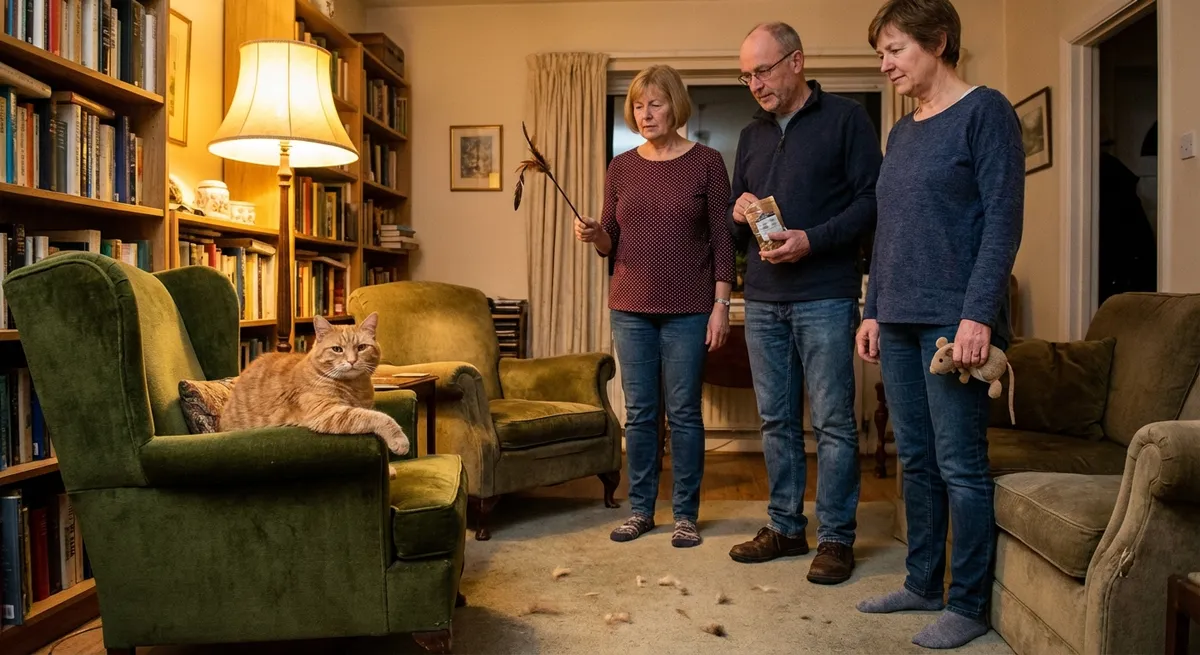
Cats walk around your home like they own 51% of the shares and you’re middle management on probation.
You think you “adopted” a cat. The cat thinks: “I acquired a tall, opposable-thumb-having food dispenser with heating capabilities and a bed I allow them to share.” Every time you talk to your cat in that high-pitched voice, it’s mentally filing you under “emotionally fragile, handle with purring.”
Scientifically speaking, cats communicate with humans differently than they do with other cats—like meowing specifically just for us. Researchers suggest this is their custom-designed “human interface language,” which means your cat has essentially created a user-friendly operating system so you can understand when it wants treats. That slow blink you think is love? That’s approval. That’s your performance review: “You are tolerable. Continue.”
And when they push things off the table while staring at you? That’s not misbehavior. That’s a reminder: “This is my world, you’re on a trial subscription.”
Shareable takeaway: Cats don’t live with humans. Humans live under cats, with occasional visitation rights to their own furniture.
2. Dogs: Full-Time Emotional Support Staff With Terrible Boundaries
Dogs are what happens when unconditional love forgets what “personal space” is.
You’re sad? Dog. You stand up? Dog. You go to the bathroom? Dog, now in attendance like a furry security detail. If dogs had a LinkedIn page, their job title would be: “Chief Vibes Officer (CVO), Specializing in Morale and Floor Crumbs.”
Studies show dogs can recognize human emotions and respond differently to happy vs. distressed faces and voices. So that means when you ugly cry into a pillow at 2 a.m., your dog isn’t confused. It’s clocking in like, “Ah. Crisis shift. Time to deploy The Lean and The Concerned Whine.”
And let’s talk walks. You think you’re walking the dog. The dog thinks it’s taking the emotionally unstable roommate out for enrichment activities and sunlight exposure: “Human has been staring at glowing rectangle for 7 hours. Must drag outside to sniff trees and remember we’re alive.”
Shareable takeaway: Dogs aren’t just man’s best friend—they’re our unpaid therapists who get paid in snacks and legally questionable quantities of praise.
3. Crows and Ravens: The Neighborhood Surveillance Committee
If cats are landlords and dogs are therapists, crows are the ultra-intelligent neighbors who know everyone’s business and will absolutely remember if you disrespected them in 2014.
Crows can recognize human faces, hold grudges, teach other crows who the “bad humans” are, and even bring gifts to people they like. That’s not normal bird behavior—that’s organized social intelligence with HR capabilities.
In experiments, crows learned which humans had previously trapped them, and years later they still reacted differently to those specific people—even passing that knowledge to new crows. Translation: If you yelled at a crow that one time in a parking lot, somewhere there’s a feathered group chat and you’re the main character.
On the flip side, treat them well and they might drop shiny gifts, coins, or random trash treasures on your porch. That’s not random. That’s “thank you for your service, tall snack-dispenser.”
Shareable takeaway: Crows don’t live in our cities. We live in their surveillance network, and they’re the only ones actually paying attention.
4. Octopuses: Underwater Escape Artists Judging Us From Jars
If aliens visited Earth and asked, “Take us to your smartest non-human,” scientists might roll out an octopus and say, “We think this one knows what’s going on, but it refuses to explain.”
Octopuses (yes, that plural is correct, calm down) can solve puzzles, open jars from the inside, recognize individual humans, and escape from tanks in labs just to mess with our sense of security. Some have been caught sneaking out at night to raid other tanks for snacks, then going back to their own like it never happened. That’s not a pet—that’s a stealth operative.
Their brains are so wild that most of their neurons are in their arms, meaning each arm can kind of “think” independently. You’re over here struggling to remember why you walked into the kitchen. Meanwhile, an octopus is essentially running eight semi-autonomous problem-solving computers attached to a central weirdly charming anxiety potato.
So when you tap on the glass at an aquarium, the octopus isn’t impressed. It’s debating whether you’re advanced enough to understand its escape plan or if it should just wait for the night shift.
Shareable takeaway: Octopuses are probably smart enough to be offended by how we pronounce “octopi,” but patient enough to keep evolving while we argue about it online.
5. Pigeons, Rats, and Raccoons: The Secret Rulers of the Urban Jungle
While we’re out here posting sunset pics and latte art, three species are actually running city life: pigeons, rats, and raccoons—the unofficial Trash Triumvirate.
- Pigeons can recognize individual people and even different styles of art in lab tests. So that pigeon who always seems to find you at lunch? It’s not random. That’s your carb dealer who knows you’re weak for bread.
- Rats can navigate mazes, solve problems, show empathy, and even “laugh” (at frequencies too high for us to hear) when tickled in experiments. They’re social, clever, and absolutely thriving in the infrastructure we built for ourselves. We made cities. They made them profitable.
- Raccoons have paws that basically function like tiny horror-movie hands. They’ve figured out how to open latches, garbage bins, and in some cases, actual doors. Long-term studies show they can remember solutions to tasks for years. Years. There’s probably a raccoon out there who remembers how to get into your old apartment complex better than you do.
To them, we’re just the clumsy giants constantly refilling the buffet and leaving our leftovers in accessible packaging. We call it “waste management.” They call it “fine dining with bonus parkour.”
Shareable takeaway: Urban wildlife didn’t invade our cities. We accidentally built massive all-you-can-eat buffets and then acted surprised when someone showed up with thumbs and a nightlife schedule.
Conclusion
Animals aren’t background characters in the human story—they’re running parallel universes of drama, strategy, and emotional intelligence, occasionally letting us guest-star as “Person Who Brings Snacks.”
Whether it’s a cat quietly managing your mental health, a dog stage-diving into your lap at every slight mood shift, a crow logging your face into the neighborhood database, an octopus speedrunning puzzle games underwater, or a raccoon prying open your trash like a locked treasure chest—one thing is clear:
We are not nearly as in charge as we think we are.
Now go look your pet in the eyes and ask: “Be honest… am I your human, or are you my weird little life manager?”
And then share this article before your dog steps on your phone and accidentally posts your camera roll.
Sources
- [National Geographic: How Cats Conquered the World (and Our Hearts)](https://www.nationalgeographic.com/animals/article/cat-domestication) - Background on cat domestication and how they adapted to live alongside humans
- [American Psychological Association: How Dogs Tune In to Human Emotions](https://www.apa.org/monitor/2015/02/dogs) - Overview of research on dogs reading and responding to human emotional cues
- [Audubon Society: Crows Never Forget a Face](https://www.audubon.org/news/crows-never-forget-face-especially-one-they-dislike) - Explains studies showing crows recognize and remember individual humans
- [Scientific American: The Mind of an Octopus](https://www.scientificamerican.com/article/mind-of-the-octopus/) - Deep dive into octopus intelligence, behavior, and problem-solving abilities
- [BBC Future: The Secret Life of Urban Animals](https://www.bbc.com/future/article/20190626-the-secret-lives-of-urban-animals) - Explores how animals like rats, pigeons, and raccoons thrive in human-built cities