Somewhere on this planet, a raccoon is watching you drop your phone for the third time today and thinking, “Wow. Evolution really went downhill, huh?”
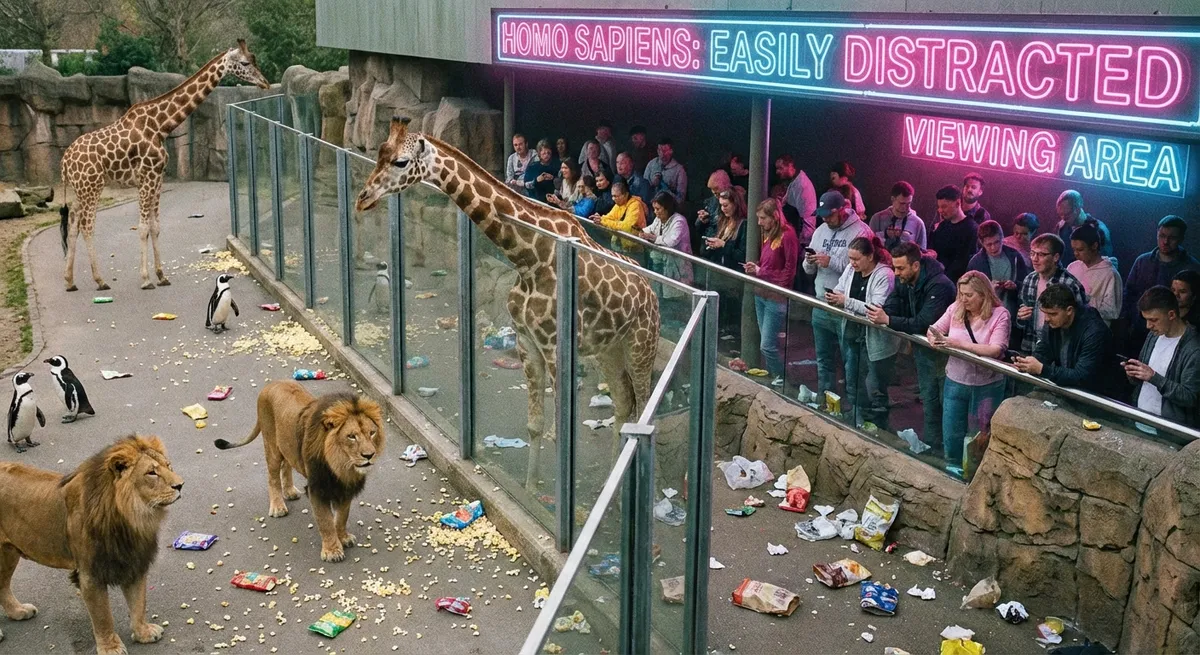
Animals see us. They have opinions. And frankly, a few of them are judging us harder than our high school classmates on Facebook.
Let’s expose five undeniable signs that animals are low‑key roasting us, forming conspiracies, and absolutely clowning humanity behind our backs. Share this with a friend who is clearly the emotional support raccoon of your group.
1. Crows Are Basically Running Neighborhood Surveillance
Crows don’t just fly around being aesthetically mysterious—they remember faces. Specifically, your face.
Researchers have found that crows can recognize individual humans, hold grudges, and even tell their friends who to hate. If you annoyed a crow once in 2017, there is a non‑zero chance you’re on some avian blacklist called “Do Not Trust: Wears Crocs, eats suspicious snacks.”
They also bring gifts to humans they like: buttons, shiny things, bits of metal—basically tiny offerings of friendship or tribute. Meanwhile, what do we do? Pull out our phones, take grainy photos, and say, “Crow!” like it doesn’t already know what it is.
Viral‑potential angle:
Post a pic of a crow with the caption:
“New landlord just arrived. Rent is one peanut per day and eternal respect.”
2. Octopuses Are Escape Artists Judging Our Security Systems
Octopuses have three hearts, blue blood, and zero respect for human aquarium design. They can unscrew jars from the inside, squeeze through gaps smaller than your bank account balance, and sneak into neighboring tanks for midnight snack runs.
There are real stories of octopuses:
- Slipping out of tanks at night
- Eating other animals
- Returning to their own tank like nothing happened
So while we’re out here forgetting our passwords for the 11th time, there’s an octopus somewhere currently speed‑running “Prison Break: Ocean Edition” and wondering why we lock doors if we’re just going to lose the keys.
Viral‑potential angle:
Caption over a picture of an octopus:
“Me: can’t open jar of pickles
Octopus: I have escaped six facilities and altered my own environment, Jessica.”
3. Squirrels Are Gaslighting Us About Their Memory
Squirrels bury nuts for later. Cute. Adorable. Seasonal aesthetic.
Tiny detail: they also fake bury nuts if they think they’re being watched. That’s right—if a squirrel suspects another squirrel is spying, it’ll pretend to stash food in one spot while secretly hiding the good stuff somewhere else.
So these fluffy-tailed chaos gremlins are out here running misinformation campaigns, acting like feathery little spies. Also, they forget where they put a ton of their real food, which accidentally helps grow forests.
This means:
- Step 1: Squirrel lies about nut location.
- Step 2: Squirrel forgets real nut location.
- Step 3: New tree.
- Step 4: Humans call it “reforestation.”
Viral‑potential angle:
Meme text: “Squirrels be like ‘Trust no one, not even yourself’ and then accidentally plant half the forest.”
4. Dolphins Are Smart Enough to Be Menaces on Purpose
Dolphins have big brains and chaotic hobbies. Some populations use tools—like sponges—to protect their snouts while hunting. Others… pass around pufferfish to get mildly intoxicated. Yes, really.
They also have unique whistles that act like names, form alliances, and apparently gossip. Meanwhile, you’re trying to remember whether you already said “Nice!” in the group chat or if it’s socially acceptable to write it again.
And because that’s not enough, dolphins can recognize themselves in mirrors, suggesting self‑awareness. So while we’re out here rewatching the same show instead of fixing our lives, dolphins are out there vibing, inventing underwater friend groups, and occasionally bullying other species for fun.
Viral‑potential angle:
Over a dolphin photo:
“Dolphins have names, use tools, and hang out with their squad. So basically… they’re just wet influencers.”
5. Parrots Are Out Here Speed‑Running Our Language
Parrots don’t just repeat words. Some of them understand context. There are birds that:
- Ask for specific foods by name
- Use different words based on who they’re talking to
- Have invented their own little “phrases” and preferences
Meanwhile, humans: “I took three years of French and all I can say is ‘Where is the library?’ and ‘I am a sandwich.’”
There’s also evidence of parrots teaching each other phrases they learned from humans. Imagine moving into a new place and the wild parrots in your neighborhood already know how to shout “BRO” and fake laugh like your old coworker.
Viral‑potential angle:
Parrot meme:
“Parrot repeats your late‑night rant word for word. Now it’s your emotional support therapist and blackmail folder.”
Conclusion
Every time we think we’re the main characters of Earth, animals casually drop a new plot twist:
- Birds with grudges
- Sea creatures outwitting security
- Tree‑planting squirrels by accident
- Aquatic chaos influencers
- Feathered roommates learning our language
If the planet is a reality show, we’re not the stars. We’re the background characters who keep walking into glass doors while a crow live‑tweets the whole thing from a lamppost.
Share this with someone who:
- Has “raccoon energy”
- Would 100% be outsmarted by a squirrel
- Or has beef with at least one bird
Because at this point, the animals are clearly watching. We might as well give them good content.
Sources
- [American Museum of Natural History – Crows Know and Remember Human Faces](https://www.amnh.org/explore/news-blogs/on-exhibit-posts/crows-know-and-remember-human-faces) – Research on how crows recognize and remember specific people
- [Scientific American – The Mind of an Octopus](https://www.scientificamerican.com/article/the-mind-of-an-octopus/) – Explores octopus intelligence, problem‑solving, and escape behavior
- [National Park Service – Sciuridae: Squirrels](https://www.nps.gov/articles/squirrels.htm) – General squirrel behavior, including caching and ecological impact
- [Smithsonian Magazine – The Dolphin Brain](https://www.smithsonianmag.com/science-nature/the-dolphin-brain-727936/ ) – Overview of dolphin intelligence, social behavior, and cognition
- [Harvard Gazette – Talking with Alex the Parrot](https://news.harvard.edu/gazette/story/2004/09/talking-with-alex-the-parrot/) – Details on language and cognition in an African grey parrot studied by researchers