
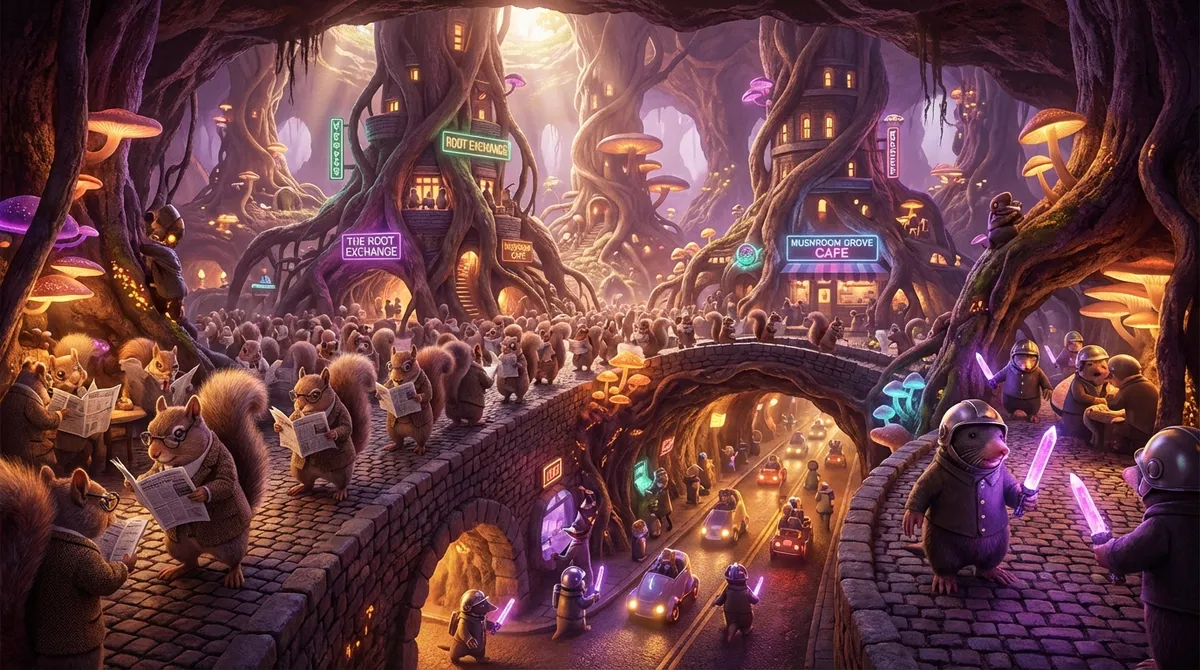
Some people think animals just vibe, eat snacks, and occasionally ruin your garbage can. Incorrect. Many of them are busy running full-blown tiny societies that honestly look way more organized than whatever humans are doing right now.
From fish that fake their résumés to birds flexing their architecture degree, the animal world is basically one long group project where we’re the underachievers.
Let’s expose five extremely shareable reasons animals might actually be running things behind the scenes.
1. Ants: The Tiny Unionized Overlords of Everything
Ants don’t just “live in colonies.” They run hyper-efficient cities with public transportation, construction crews, childcare, garbage management, and food supply chains that put most governments to shame.
They divide jobs: workers, soldiers, nurses, builders, royalty. They communicate using chemical messages (pheromones), which is basically texting but faster and less typo-prone. They build underground tunnels with ventilation systems, manage traffic, and rescue injured coworkers like tiny hard-hat-wearing paramedics.
Some ants even farm. Leafcutter ants collect leaves, bring them underground, and use them to grow fungus—yes, they invented agriculture millions of years before humans. They even use microbes to protect these fungus gardens from mold. That’s right: ants have pest control for their crops.
Meanwhile, you’ve got bread molding in your kitchen and somehow they’re the “simple” creatures.
Shareable thought: Ants have universal healthcare, farming, and public works. We have meetings that could’ve been emails.
2. Dolphins: Smooth-Brained? Absolutely Not.
Dolphins are out here living like oceanic drama queens with advanced social politics. They have names—unique whistles that function like “Hey, I’m Chloe” but underwater. Other dolphins can call them by this whistle, even years later. That’s long-term recognition, not “vibes only.”
They form squads, alliances, and what biologists politely call “complex social networks,” which is science-speak for “cliques and friend drama.” Male dolphins team up in groups to compete for access to females, and these alliances can last for decades. That’s longer than most band reunions.
They also teach each other stuff. Some dolphins pass down hunting techniques, like using sponges on their snouts to protect themselves while digging in the seafloor. That’s tool use AND generational knowledge. Congratulations, you’ve just met Grandma Dolphin.
And yes, they’ve been observed playing, pranking, and potentially getting high off pufferfish toxins. So: intelligent, social, and chaotic. Basically, if dolphins had Wi-Fi, they’d run the internet.
Shareable thought: Dolphins have names, alliances, and culture. We have group chats that die after three days.
3. Crows: Feathered Mob Bosses With Perfect Memory
If you wrong a crow, it will remember. Forever. And it might tell its friends. And its children. And its children’s friends. Crows hold grudges like it’s a full-time job.
Researchers found that crows can remember human faces, especially ones associated with danger or stress. Not only that—they warn other crows, who then also learn to hate your face. That’s intergenerational beef.
Crows also use tools, solve multi-step puzzles, and are smart enough to drop nuts on roads so cars crack them open. Some have even been seen using traffic lights: drop nut, wait for red light, retrieve snack, don’t die.
Their social lives are intense. They hold what look like “crow funerals,” gathering around dead crows to observe and learn about threats. Scientists think they might be studying the situation—which is either very wholesome or very horror-movie, depending on your mood.
Shareable thought: Somewhere outside, a crow knows what you look like and has already filed the paperwork in Emotional HR.
4. Meerkats: Desert Neighborhood Watch on Maximum Difficulty
Meerkats aren’t just adorable little sand ferrets; they’re running advanced security operations in the desert. They live in clans with strict roles, and one of the most important jobs is “sentry”: the one that stands up on a rock and screams if life goes sideways.
While the rest of the group digs for food, wrestles, or teaches the kids how not to die, the sentry meerkat scans the horizon for predators. They have different alarm calls depending on the threat—like a specific yell for snakes vs. birds of prey—so everyone knows exactly how freaked out to be.
They also use communal burrow systems like a network of safe houses, with different chambers for sleeping, hiding, and raising pups. And yes, they have teaching culture too: adults will bring baby meerkats half-dead scorpions so they can practice hunting without instantly losing at life.
Is that dark? Absolutely. Is it effective? Also absolutely.
Shareable thought: Meerkats invented babysitting, alarm systems, and tactical training. You still forget where you parked.
5. Bees: Hexagon Engineers With an Economy and PR Team
Bees are not “just” buzzing pollen burritos. They’re running a full-on economic system powered by geometry and interpretive dance.
Honeybees live in colonies with a queen, thousands of workers, and a few dudes (drones) whose main job is… uh… extremely seasonal. Workers clean, feed larvae, build new combs, guard the entrance, cool the hive with their wings, and forage. All on a rotating schedule. It’s like the world’s most efficient shift-based startup, but with more honey and fewer awkward icebreakers.
Now for the wild part: they communicate with the waggle dance. A forager bee returns to the hive and literally dances in specific angles and durations to show others where food is. The direction of the wiggle relative to the sun + how long she waggles = “Yo, there’s a buffet 300 meters that way.”
Honeycomb itself is built from perfect hexagons, a shape that packs maximum storage with minimal material. They’re accidentally doing engineering and resource optimization while sticky and airborne.
Shareable thought: Bees do GPS, architecture, and logistics via dance. The most you’ve done with dancing is sprain something at a wedding.
Conclusion
While we’re out here forgetting our passwords and eating cereal for dinner, animals are busy running child care systems, managing multi-level societies, inventing farming, keeping grudges, and literally dancing out directions.
They’re not just “cute” or “wild.” They’re running secret little civilizations right under (and above, and around) us—with organization levels that should honestly make us a bit uncomfortable.
So next time you see a line of ants, a yelling meerkat, or a suspiciously observant crow? Just remember: you’re on their turf. Act accordingly. Maybe say hi. And definitely don’t make fun of their tiny legs. They’re more organized than all of us combined.
Sources
- [National Geographic – Ants: Tiny Farmers and Builders](https://www.nationalgeographic.com/animals/invertebrates/facts/ants) – Overview of ant behavior, colony structure, and farming habits
- [Smithsonian Ocean – Dolphin Social Life and Intelligence](https://ocean.si.edu/ocean-life/marine-mammals/dolphins) – Details on dolphin communication, alliances, and cultural behaviors
- [Cornell Lab of Ornithology – Crows and Their Intelligence](https://www.birds.cornell.edu/home/bring-birds-back/american-crow/) – Explains crow problem-solving skills, facial recognition, and social learning
- [BBC Earth – Meerkat Families and Social Structure](https://www.bbc.com/earth/story/20150907-secret-lives-of-meerkats) – Insight into meerkat clans, sentry behavior, and pup training
- [USDA Agricultural Research Service – Honey Bee Facts](https://www.ars.usda.gov/oc/br/bee-facts/) – Information on honeybee communication, colony organization, and the waggle dance