
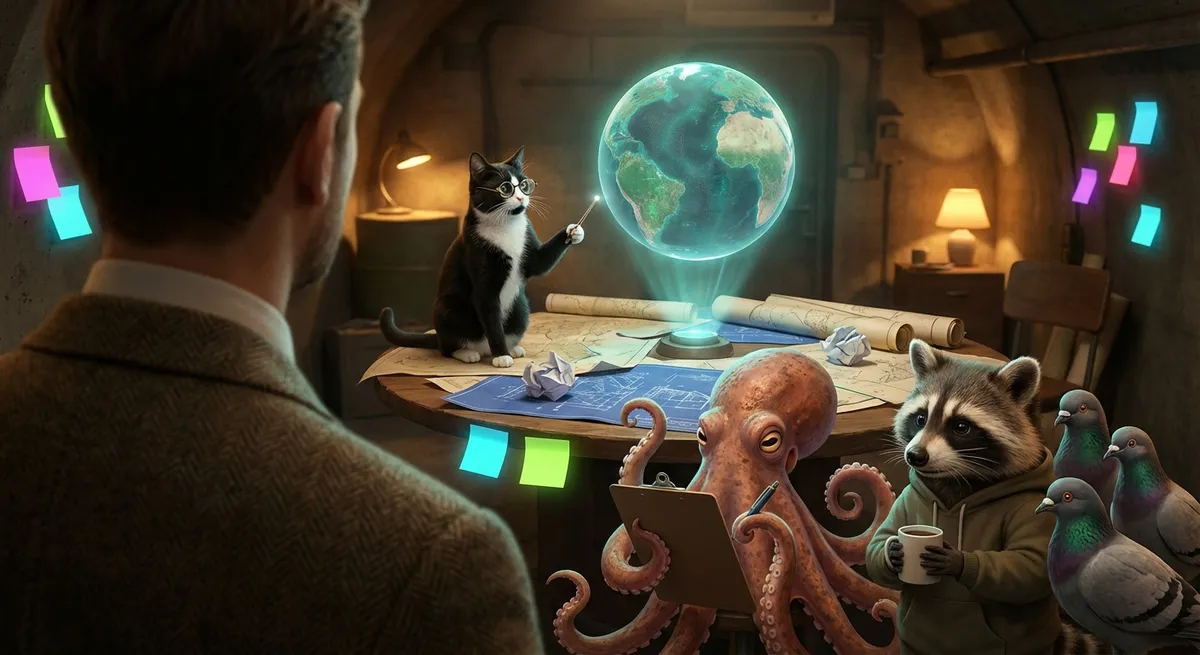
Earth looks like it’s run by humans, but if you zoom out for two seconds, it’s obvious we’re the kid who did the PowerPoint theme and nothing else. The real work? That’s on the animals quietly keeping the planet alive, saving our butts, and occasionally throwing a custard pie directly at our dignity.
Let’s expose the overachievers of the animal kingdom—and the chaos they manage while we forget our reusable bags for the 47th time.
Ocean Bouncers: Whales Are Literally Editing the Climate
Whales aren’t just majestic sea buses for Pixar protagonists; they’re running a whole climate side hustle.
When whales feed deep and poop at the surface (yes, this is about poop, stay), they fertilize microscopic plants called phytoplankton. Those little floaty beans suck up massive amounts of CO₂ from the atmosphere—like if a forest and a Roomba had a baby.
Scientists estimate phytoplankton absorb billions of tons of carbon dioxide each year, and whales boost their growth by churning nutrients through the water. Some studies suggest that bringing whale populations back to pre-whaling levels could remove additional carbon from the atmosphere just by letting the big guys do their thing: eat, swim, poop, repeat. That’s their full job description. Same.
Meanwhile, humans try to offset our emissions by:
- Planting one tree
- Posting it on Instagram
- Forgetting to water it
Whales don’t post. Whales just hard-carry the climate curve and mind their business.
Shareable takeaway: While we complain about gas prices, whales are quietly running a floating carbon-removal startup with nothing but krill and vibes.
Squirrel Chaos: The Furry Menace Accidentally Reforests the Planet
Squirrels are the unhinged interns of the forest—nervous, scattered, and somehow still essential.
Their entire personality:
- Hide nuts like a paranoid dragon
- Forget where half of them are
- Accidentally plant forests
Tree species like oaks depend on animals like squirrels to move their seeds around. When squirrels bury acorns and then get distracted, those forgotten snacks can sprout into new trees. Multiply that by millions of squirrels over years, and you get entire forests that exist because rodents have no organizational skills.
Humans:
- Start a landscaping project
- Buy plants
- Forget them in the car
- Panic-hoard food
- Black out
- Accidentally terraform the neighborhood
Squirrels:
Some research suggests these “scatter-hoarding” animals significantly shape which trees survive and where forests grow. So yes, the jumpy gremlin yelling at you from a branch might literally be the unpaid project manager of your local ecosystem.
Shareable takeaway: Squirrels are out here accidentally planting the future while you can’t keep one basil plant alive for a week.
Bee Internet: Pollinators Run the Food Supply Like a Wi-Fi Network
If bees quit, civilization basically blue-screens.
Bees and other pollinators (but mostly bees, the tiny overachievers) help fertilize a huge chunk of the fruits, vegetables, and nuts we eat. The UN estimates that around three-quarters of global food crops rely at least partly on animal pollination. No bees = no almonds, fewer apples, sad berries, chaos baking.
Also, bees literally invented interpretive dance as a data-transfer protocol. Honeybees “waggle dance” to show their coworkers:
- Where the good flowers are
- How far away they are
- Which direction to fly
That’s GPS, Yelp, and Google Maps all in one extremely judgmental butt wiggle.
Meanwhile, humans:
- Can’t find the restaurant while holding a phone with three map apps open
- Still make a wrong turn
- Argue about it for 20 minutes
- Keeping ecosystems functioning
- Feeding wildlife
- Supporting global agriculture worth billions of dollars
And while they’re dancing, bees are quietly:
Shareable takeaway: The entire snack aisle is being held together by anxious insects doing tiny rave choreographies.
Elephant Memory Mode: Ecosystem Engineers With Better Long-Term Planning Than Us
Elephants don’t just remember where the good watering holes are; they help create and maintain entire landscapes.
As they roam, they:
- Knock down trees (rude, but useful)
- Open up clearings for grass to grow
- Dig for water, creating mini-watering holes other animals use
- Spread seeds through their poop (poop is really having a strong showing today)
In some African ecosystems, elephants are considered “keystone species”—remove them, and everything else starts glitching. Their movements shape which plants grow, which animals can live there, and how water is accessed.
Also, their memory is absurd. Matriarch elephants can remember:
- Drought locations from years back
- Safe migration routes
- Dangerous areas to avoid
So while humans need three reminders to bring their keys, elephants hold an entire generational map of survival in their head like it’s a casual Spotify playlist.
Shareable takeaway: Elephants are literally long-term land managers with emotional intelligence, and we’re out here forgetting our own email passwords.
Trash Cleanup Crew: Vultures, Rats, and Other “Ew” Animals Saving Your Health
Time to apologize to the “gross” animals. They’re doing the jobs nobody wants and definitely nobody thanks them for.
Vultures:
- Eat dead animals before they rot and spread disease
- Have acid in their stomachs strong enough to kill nasty pathogens
- Reduce the risk of things like anthrax or rabies lingering in the environment
In places where vulture populations have crashed, research shows disease risks and feral dog populations can go up, because carcasses stick around and other, less sanitary scavengers move in. So yeah, the bald bird you’re calling “creepy” is basically biohazard control.
Rats and mice, chaos gremlins that they are, also:
- Help turn organic waste into nutrients for soil
- Feed predators like owls, hawks, and foxes
- Serve as early warning systems in labs for diseases and toxins (yes, they’re involuntary heroes)
- Roll poop into balls
- Bury it
- Improve soil and control parasites
Even insects like dung beetles:
Which is more than most of us are doing with our weekend.
Shareable takeaway: The animal world’s “ew” squad is quietly handling pest control, disease reduction, and waste management while we retch at a single spider.
Conclusion
Humans like to think we’re the main characters, but the group project called “Earth” says otherwise. Whales are running ocean climate mods, squirrels are scatter-planting forests, bees are holding up the produce aisle, elephants are long-term land architects, and vultures are doing industrial-strength cleanup with zero funding and terrible PR.
We’re basically the kid who showed up, named the project, and then wrote “By: Humanity” in 72-point font.
So next time you see an animal just existing:
- That squirrel you side-eye? Freelance forest manager.
- That bee near your drink? Underpaid food-supply engineer.
- That vulture overhead? Public health department on wings.
Respect the staff. Tip your local ecosystem workers (with habitat protection, less pollution, and maybe not bulldozing everything for another parking lot).
If this made you rethink who’s really in charge down here, go ahead and share it—consider it your small contribution to the actual group project.
Sources
- [UN FAO – The Importance of Bees and Other Pollinators](https://www.fao.org/pollination/en/) - Overview of how pollinators support global food production and ecosystems
- [UNEP / GRID-Arendal – The Role of Whales in Nutrient Cycling](https://www.grida.no/resources/6923) - Explains how whales enhance phytoplankton growth and contribute to carbon sequestration
- [National Park Service – Squirrels and Forest Regeneration](https://www.nps.gov/articles/squirrels-and-seeds.htm) - Describes how scatter-hoarding rodents help plant and shape forests
- [WWF – Elephants as a Keystone Species](https://www.worldwildlife.org/species/elephant) - Details how elephants engineer and maintain ecosystems across their ranges
- [BirdLife International – Vultures and Ecosystem Health](https://www.birdlife.org/news/2017/02/23/why-vultures-so-important-ecosystems/) - Discusses vultures’ role in disease control and environmental cleanup