
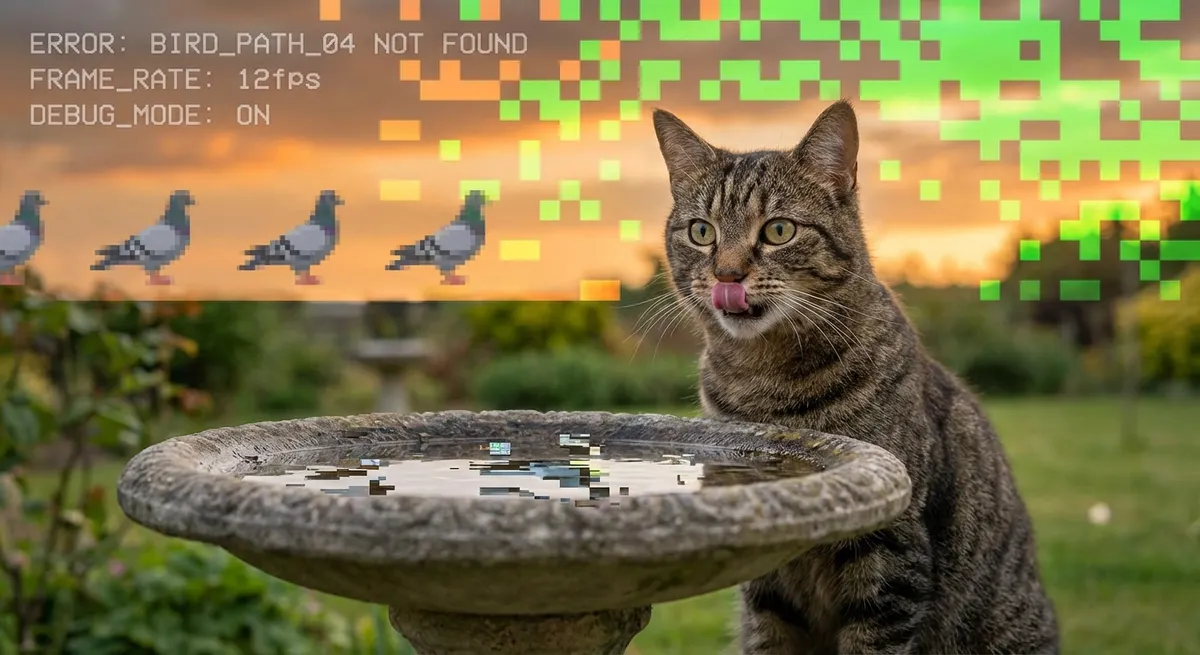
Some animals are majestic. Some are terrifying. And some are walking around like side characters coded by an overworked game dev at 3 a.m. with a coffee addiction and zero supervision.
Today, we’re not talking about the noble eagle or the majestic lion. We’re talking about the creatures that look like they spawned with the wrong settings, glitch through reality, or have passive-aggressive beef with physics itself.
Here are five extremely real animals that feel less like wildlife and more like background characters in an open-world game someone slightly messed up.
The Mantis Shrimp: Nature Gave It Laser Eyes And A Gun
If someone modded a shrimp with cheat codes, you’d get the mantis shrimp. It looks like a rainbow murder-lobster and lives in a burrow like an underwater supervillain.
First, its eyes. Humans: 3 color receptors. Dogs: 2. Mantis shrimp? Up to 16. It can see ultraviolet, polarized light, and probably your deepest insecurities. Scientists study its vision to understand advanced optics, while the mantis shrimp uses it primarily to punch things.
And about that punch: this tiny creature can strike with the speed of a bullet from a handgun. Its club-like arms accelerate so fast they briefly boil the water around them, creating a tiny shockwave of death. That’s not a metaphor. That’s a physics crime.
Aquarium keepers literally call it “thumb splitter” because it can crack glass and break fingers. Meanwhile, it just walks around like a colorful little NPC whose default animation is “obliterate crab.”
If mantis shrimp had social media, they’d post “just vibing” under videos of themselves atomizing snails.
Axolotls: Perpetual Babies Who Refuse To Grow Up
The axolotl looks like a Pokémon that never finished evolving. It’s a salamander that, for reasons known only to nature and possibly chaos, never really grows up. Biologically, it stays in its larval, underwater, fluffy-gills stage for life—this is called neoteny, but it’s basically “permanent baby mode.”
It lives in lakes around Mexico City and just… floats there. Smiling. Forever. It has a permanent “I have no idea what’s going on but I support you” face. If an axolotl walked into your group chat, it would type only: “omg yay!!!” and send 14 heart emojis.
But here’s the plot twist: this adorable noodle can regrow its limbs, tail, spinal cord, parts of its heart, and even chunks of its brain. Repeatedly. Without scarring. Scientists are like, “you are the key to regenerative medicine,” and the axolotl is like, “bubble time!”
They’re critically endangered in the wild, but absurdly popular in labs and as pets. So somewhere out there is a creature that looks like a pink water lizard plushie… and simultaneously flexes on every other animal with “oh, you needed that limb? I’ll just grow another.”
Basically: emotional support chaos baby with built-in DLC healing powers.
Capybaras: The Chillest Creatures On Planet Earth
Capybaras are what you’d get if you combined a potato, a sofa, and the vibe “we’ll figure it out.” They’re the world’s largest rodents, but instead of using that power for evil, they use it to sit in hot springs looking like they pay taxes and are tired.
Their whole brand is “unbothered.” Birds sit on them. Monkeys sit on them. Crocodiles have been photographed casually existing near them. Capybaras just stare into the middle distance like a middle manager on their third Zoom call of the day.
They’re hyper-social, hang out in herds, and communicate with little squeaks, clicks, and purrs. Yes, they purr. They’re basically giant guinea pigs whose main personality trait is “it’s not that deep, bro.”
Capybaras are so chill they’ve become meme royalty—photos of them calmly taking baths with oranges, sharing benches with other animals, or just existing with maximum neutrality spread across social media like a collective serotonin patch.
In the NPC hierarchy, capybaras are the village elders you visit when your life is falling apart. They say nothing. You feel better anyway.
Pistol Shrimp: Tiny Sniper With A Built-In Sound Cannon
Imagine a shrimp so small you could lose it in your salad… but it can fire a sound blast loud enough to stun or kill prey. That’s the pistol shrimp. It’s about the size of your finger and armed with one oversized claw that acts like a biological stun gun.
When it snaps that claw shut, it shoots out a super-fast jet of water that creates a tiny collapsing bubble—a cavitation bubble—that briefly reaches temperatures comparable to the surface of the sun and makes a shockwave loud enough to mess with submarine equipment.
So yes: there is a shrimp that can accidentally jam underwater microphones used by scientists and navies. Somewhere, a serious oceanographer is listening to sonar recordings and hearing “shrimp with anger issues” on loop.
They use this power to knock out fish, defend their territory, and sometimes just add chaos to the coral reef soundscape. Entire colonies of pistol shrimp can make reefs sound like a frying pan of bacon.
While other animals sneak, stalk, or camouflage… the pistol shrimp just rolls in with “what if I used noise as a weapon” energy.
Lyrebirds: Expert Mimics Who Are Definitely Recording You
If an NPC existed solely to roast you with perfect impressions, it would be the lyrebird. Native to Australia, this bird is an elite mimic—it doesn’t just copy other birds, it can imitate chainsaws, camera shutters, car alarms, phone ringtones, and human-made noises it hears in the forest.
In the wild, lyrebirds have been recorded perfectly copying construction sounds, dogs barking, and even camera clicks from birdwatchers. Somewhere in Australia, a lyrebird has definitely mocked a confused hiker by repeating their “hellooo?” call back at them.
It does all this while wearing a dramatic tail that unfurls into a fan shape during courtship displays. The males dance, sing, and layer in every sound effect they’ve ever heard like a one-bird remix: “Here’s my impression of 12 different species, a chainsaw, and your alarm clock at 6 a.m.”
Scientists think this mimicry helps attract mates—basically, the more complex your playlist, the hotter you are in lyrebird society. Imagine dating based entirely on how many Spotify playlists you can beatbox from memory.
The result? A stunning bird that doubles as a very realistic soundboard, making forests occasionally sound like someone left a construction site, a dog park, and a tech store on shuffle.
Conclusion
Some animals are majestic, some are scary, and some feel like the universe accidentally hit “randomize character” and then said “you know what, ship it.”
From bullet-punching shrimp and regenerating water noodles to zen potatoes, sonic snipers, and feathered sound engineers, these creatures are living proof that nature contains both breathtaking beauty and pure, uncut weirdness.
So the next time you scroll past an animal video that looks too ridiculous to be real, remember: the simulation is running JUST fine. It’s the patch notes you should be worried about.
Now go send this to someone who thinks humans are the main characters.
Sources
- Smithsonian Ocean: Mantis Shrimp - Overview of mantis shrimp biology, eyesight, and powerful strikes
- National Geographic: Axolotl - Details on axolotl neoteny, regeneration, and conservation status
- San Diego Zoo: Capybara Facts - Background on capybara behavior, social life, and habitat
- NOAA Ocean Exploration: Sound in the Sea - Explanation of cavitation, relevant to pistol shrimp’s snapping claw
- BBC Earth: The Superbly Skilled Lyrebird - In-depth look at lyrebird vocal mimicry and behavior