
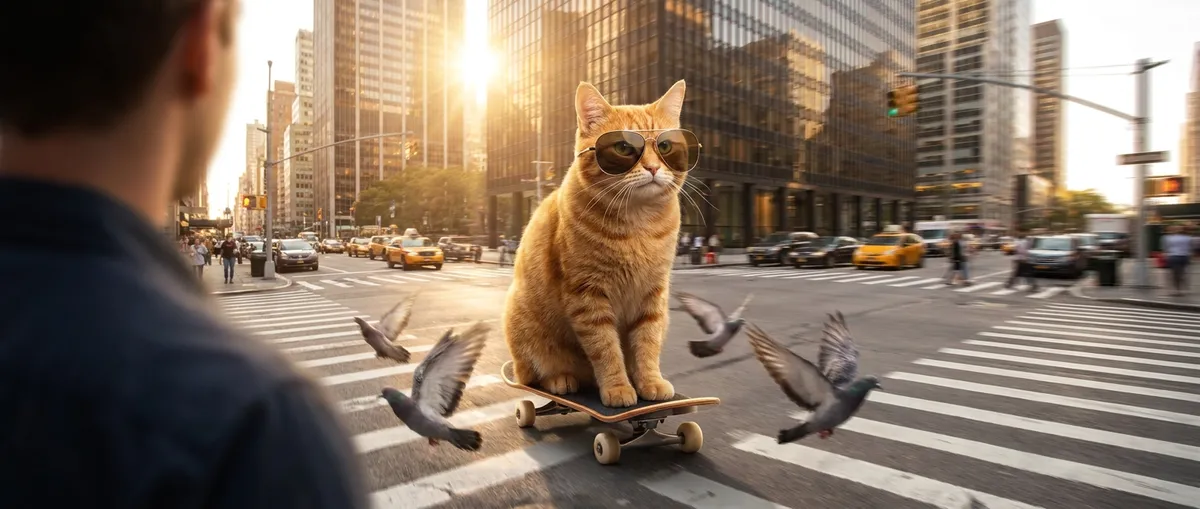
There are two types of people: those who think animals are “cute” and those who are 100% convinced they’re all chaotic main characters in a secret cinematic universe. Spoiler: the second group is correct.
From birds that understand public transportation better than we do to octopuses that treat aquariums like prison-break rehearsals, the animal kingdom is serving drama, comedy, and thriller energy on a daily basis.
Let’s pull back the curtain on some of the most unreasonably iconic behavior happening out there—and yes, you’re absolutely going to want to send this to your group chat with “THIS IS YOU” captions.
The Crow That Knows How Vending Machines Work (And Probably Your PIN)
Crows are the unofficial honor students of the bird world, except they skipped the “be normal” memo. These birds can recognize human faces, remember who was rude to them, and then tell their friends about it. That’s not wildlife; that’s a neighborhood gossip network with wings.
In lab experiments, crows have solved multi-step puzzles that honestly look like they came from a very advanced escape room. They’ll use tools, drop nuts in traffic so cars crack them open, and even memorize where they’ve hidden food like tiny feathery librarians.
There have been real-world cases of crows bringing people “gifts” (shiny trash, bottle caps, beads) if they get fed regularly. That’s basically a subscription service. Give snack. Receive random treasure. Etsy wishes.
If you’ve ever walked outside and thought, “That crow is staring directly into my soul,” correct. It is. And it’s saving that information in long-term memory like, “Noted. Green jacket. Walks weird.”
Next time you see a crow, just assume it knows your schedule, your habits, and your Starbucks order. Treat them well. You do not want to be on the avian block list.
Octopuses: The Escape Artists Who Are Over Your Security System
Octopuses are built like anxiety: soft, shapeshifting, and always looking for a way out. They can squeeze through any space bigger than their beak, which is… tiny. Aquarium teams have caught them on camera unscrewing jar lids from the inside, opening latches, and straight-up walking across the floor to get to another tank for snacks.
One octopus famously learned to shoot jets of water at a light it didn’t like until it short-circuited. Another figured out how to sneak out at night, eat fish from neighboring tanks, and go back home before morning like some sort of soggy cat burglar.
They also recognize humans, can distinguish between friendly caretakers and annoying ones, and have been known to splash the people they don’t like. That’s not random behavior; that’s petty. Respect.
Scientists have put octopuses through puzzle tests, mazes, and object recognition tasks, and they just keep crushing it like they’re speed-running intelligence trials. Their brains are spread partly through their arms, which means each arm has a level of independent control. You’re not wrestling a creature; you’re wrestling eight semi-autonomous noodles with opinions.
If another species ends up hacking our Wi-Fi and changing all our passwords, my money is absolutely on an octopus in a lab tank somewhere, quietly learning Python.
Pigeons: Secret Math Nerds With Zero Fashion Shame
City pigeons look like they’re running on three brain cells and leftover fries, but plot twist: they’re unreasonably smart for animals we mostly associate with train stations and bad bread.
Researchers have shown pigeons can differentiate between different paintings (like Monet vs. Picasso), recognize letters of the alphabet, and categorize images in ways that look suspiciously like “basic math, but make it bird.” They can even understand the concept of sequences—aka the building blocks of counting.
They also have insane navigation skills. Homing pigeons were used for wartime messaging because they can find their way home from far-away, unfamiliar locations. Meanwhile, we open Google Maps to go somewhere we’ve been 14 times. Humbling.
So the next time you see a pigeon strutting through a crosswalk like it pays taxes, remember: that bird might be better at pattern recognition than you were in 7th grade. It’s just choosing to dress in the same gray jacket every day like it’s doing normcore cosplay.
Underneath that crumb-covered exterior is a data-processing machine with tiny pink feet. Respect the feathered commuters.
Dolphins: Hyper-Social Chaos Gremlins With Built-In Sonar
Dolphins have fantastic PR. Everyone’s like, “They’re so friendly and smart!” which is true, but also: they are absolutely the drama.
They have names—well, signature whistles—which function like “Hey, I’m Chloe” but in underwater ringtone format. They call each other by those individual whistles, remember them for years, and can even “introduce” themselves to new dolphins. That’s LinkedIn, but wet.
They work together to hunt by herding fish, taking turns eating, and coordinating roles like an underwater raid party. Wild dolphins have also been spotted bringing gifts (like fish or seaweed) to humans, possibly as a weird, flippery form of social interaction or bribery.
Dolphins pass down culture: specific tricks, hunting methods, and behaviors get copied and shared over generations. That means there are regional dolphin trends—some groups use tools (like protecting their snouts with sponges), others have unique play styles. It’s basically TikTok sounds, but in sonar.
And yes, they play for fun, tease each other, and sometimes even other species. The ocean is their group chat, and they’re sending voice notes constantly. You are not prepared for how much personality is swimming around in there.
Bees: Tiny Fuzzy Accountants Running A Perfectly Organized Cult
Honeybees are out here doing advanced logistics, complex communication, and full-scale community management while we struggle to schedule a dentist appointment.
Inside a hive, there are specialized jobs: foragers, builders, nurses, guards, undertakers (yes, really), and of course, the queen, who is basically an overworked egg machine. Everyone else keeps the hive running through teamwork and vibes.
Bees navigate up to miles away and still find their way back to the hive using the sun, landmarks, and potentially Earth’s magnetic field like little flying compasses. When they find a good food source, they don’t just go back and yell, “It’s over there!” They do a whole waggle dance that encodes direction and distance. These insects invented interpretive GPS.
The hive can regulate its own temperature, raise new queens if necessary, and collectively decide when to move locations. That’s group decision-making, resource management, and environmental control built into a single fuzzy workforce. SimCity in a box.
Meanwhile, we panic if our group chat has to choose a restaurant. Beehives are proof that small, organized chaos blobs can successfully run a civilization—no spreadsheets required, just vibes and pollen.
Conclusion
Animals aren’t just “out there in nature” doing quiet National Geographic things. They’re running side plots, rivalries, heists, and full-on societies like the world is one giant crossover episode and we’re the background extras.
Crows are clocking your face. Octopuses are testing your locks. Pigeons are doing math in parking lots. Dolphins are gossiping in sonar. Bees are running tiny efficient empires while we doomscroll.
So the next time someone says “They’re just animals,” send them this and kindly respond: “No. They’re main characters. We’re the NPCs.”
Now go share this with the friend who is definitely a crow, an octopus, a pigeon, a dolphin, or a bee. (And if you can’t decide which one you are… you’re the octopus. Sorry. Or congrats.)
Sources
- Cornell Lab of Ornithology – Crows’ Intelligence - Overview of crow behavior, tool use, and intelligence research
- Smithsonian Magazine – The Great Escape: Octopus Edition - Details on octopus problem-solving and escape abilities
- American Psychological Association – Pigeon Perception Studies - Research on pigeons’ ability to categorize images and recognize patterns
- National Oceanic and Atmospheric Administration (NOAA) – Dolphin Social Behavior - Information on dolphin communication, social structures, and learning
- USDA Agricultural Research Service – Honey Bee Biology - Explains honeybee roles, communication, and hive organization