
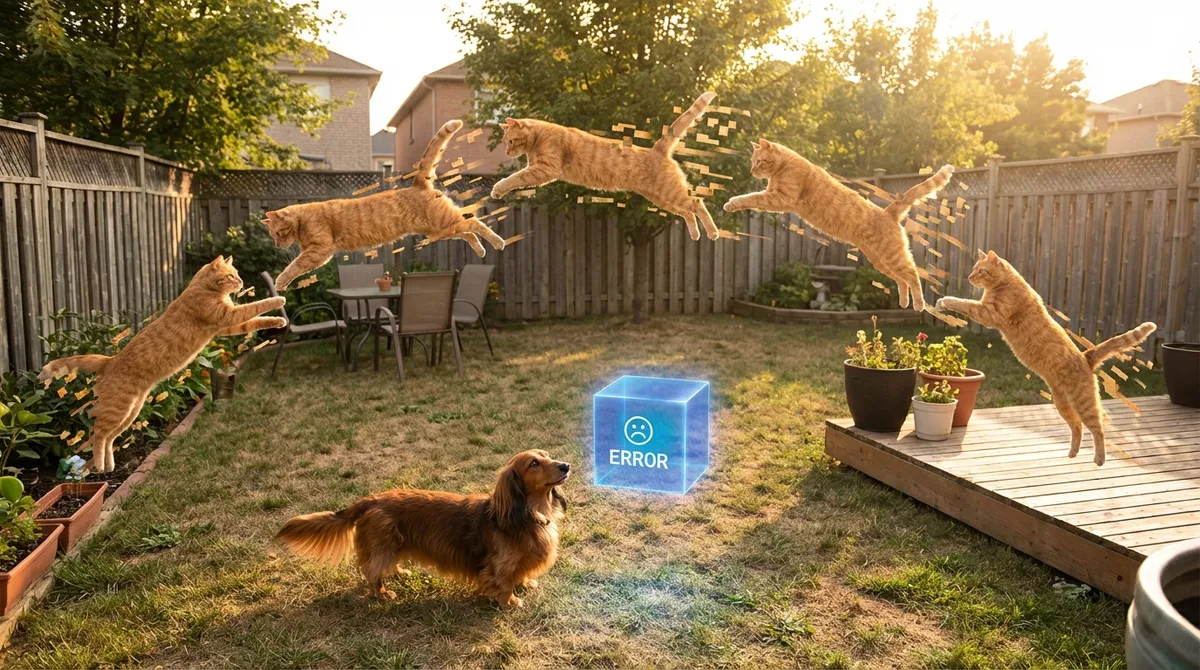
Some animals are majestic, powerful, and awe‑inspiring.
Others look like they were created on a Friday afternoon by a very tired intern smashing the “randomize” button.
This is a tribute to those creatures: the walking plot holes of nature, the furry (and scaly and feathery) anomalies that make you question whether Earth is actually just a beta version of a weird open‑world game.
Share this with a friend who also suspects we’re living in a glitchy zoo.
1. The Platypus: Nature Hit “Shuffle” And Pressed Save
The platypus looks like a group project where nobody agreed on a direction.
Bill of a duck.
Tail of a beaver.
Body of an otter.
Poisonous ankle spurs.
Egg‑laying mammal.
It’s like evolution accidentally opened Photoshop, layered four different animals, and then said, “You know what? Ship it.”
What makes the platypus extra wild:
- It’s one of only a few mammals that lay eggs. Mammal. Laying eggs. Already suspicious.
- Males have venomous spurs on their back legs. Why? Who was the platypus planning to fight?
- It uses electroreception to hunt, meaning it literally senses electric fields in the water like some kind of low‑budget Pokémon.
Early European scientists thought the first platypus specimen sent to them was a stitched‑together hoax. That’s right, this animal is so glitchy that actual professionals said, “Nope. Fake.”
Shareable thought: The platypus is what happens when your D&D group is allowed to design its own familiar.
2. Axolotls: The Cute Little “Never Grow Up” Monsters
The axolotl looks like it should grant you +5 underwater breathing in a fantasy RPG, but it’s 100% real and 300% chaos.
These salamanders basically refuse to finish growing up. They stay in their juvenile, water‑dwelling form for their entire lives, which is called neoteny. Imagine deciding you’re going to remain a permanent aquatic teenager with frilly gills and a dumb adorable smile. That’s the axolotl.
Ridiculous features unlocked:
- They can regenerate limbs, parts of their spinal cord, heart tissue, and even chunks of their brain.
- Scientists keep studying them for clues on how to help humans heal better, so yes, a tiny smiling swamp gremlin might one day upgrade medical science.
- They live in only a very small region in and around Mexico City, like limited‑edition DLC that’s impossible to find in the wild now.
Axolotls have the exact same energy as someone who refuses to turn on their camera in video calls but still contributes brilliant ideas from the digital shadows.
Shareable thought: The axolotl is a healing wizard salamander that said “I will not be adulting, thank you.”
3. Mantis Shrimp: The Tiny Sea Goblin With a Punch Like a Bullet
The mantis shrimp looks like a colorful shrimp‑dragon that someone over‑edited in Photoshop. Then you find out it can punch hard enough to break aquarium glass and you realize: this thing is a tiny underwater supervillain.
Mantis shrimp do not play:
- Their punch can reach speeds comparable to a bullet leaving a gun, creating cavitation bubbles that briefly produce heat comparable to the surface of the sun. Yes, the sun. In your aquarium.
- They see color in a way we can’t even imagine. While humans typically have three types of color receptors, mantis shrimp have up to sixteen. They can see ultraviolet, polarized light, and probably all your bad decisions.
- They crack open crabs and snails like they’re stress balls.
If humans had mantis shrimp arms, we’d be banned from every “You Break It, You Buy It” establishment on Earth.
Shareable thought: The mantis shrimp is a rainbow murder goblin with god‑tier vision and a built‑in boxing glove.
4. Pistol Shrimp: The Ocean’s Tiny Gun With Anxiety Issues
The pistol shrimp looks normal… and then you find out it can stun prey by snapping its claw so hard it makes a shockwave. This is not metaphorical. It literally snaps its claw and creates a bubble that explodes.
Highlights from “Things That Should Not Physically Happen But Do”:
- When it snaps, the collapsing bubble briefly reaches temperatures comparable to the surface of the sun. Again, the sun is not okay with how often it’s being used as a unit of measurement for small shrimp.
- That snap is also extremely loud underwater. Some pistol shrimp colonies are so noisy they can interfere with sonar and underwater communication.
- They sometimes live in little roommate arrangements with goby fish: the fish acts like a lookout while the shrimp digs the burrow. Tiny undersea roommates running a real estate co‑op.
If the mantis shrimp is the boxing champion, the pistol shrimp is the one who brought a sound‑barrier‑breaking Nerf gun to a pool party.
Shareable thought: The pistol shrimp is proof that even a 2‑inch shrimp can be overpowered and extremely dramatic.
5. Tardigrades: The Indestructible Dust Bears Just Hanging Out
Tardigrades, also known as water bears or moss piglets (yes, really), are microscopic creatures that look like someone tried to design a plush toy from memory in the dark.
They are also casually indestructible.
Tardigrade cheat codes include:
- They can survive being frozen, boiled, blasted with radiation, and thrown into the vacuum of space like cosmic confetti.
- When things get bad, they curl up into a dried‑out form called a “tun,” slow their metabolism to almost zero, and just… wait out the apocalypse.
- They’ve survived temperatures from near absolute zero to above 300°F (150°C), pressures greater than those at the bottom of the ocean, and high levels of radiation.
Meanwhile, humans drink one slightly suspicious latte and need three days to recover.
Shareable thought: Tardigrades are basically “save game” files for life itself—tiny backup copies of “still alive, somehow.”
Conclusion
Animals are not just “lion, tiger, dog, cat.”
They are also:
- A poison‑ankled, egg‑laying, electro‑detecting duck‑otter (hi, platypus).
- A salamander that said “respawn limb” and actually meant it.
- A shrimp that punches like a gun and another that claps like a thunder god.
- A microscopic pillow‑worm that can casually vibe through space.
Next time you think Earth is boring, remember: somewhere out there, a mantis shrimp is seeing sixteen kinds of colors you can’t even name, a pistol shrimp is clapping thunder with one claw, and a tardigrade is napping through cosmic horror like it’s a mildly inconvenient Tuesday.
Send this to someone who needs proof the universe is run by an extremely creative chaos engine.
Sources
- [Australian Museum – Platypus](https://australian.museum/learn/animals/mammals/platypus/) – Details on platypus biology, venom, and evolutionary weirdness
- [Smithsonian’s National Zoo – Axolotl](https://nationalzoo.si.edu/animals/axolotl) – Overview of axolotl neoteny, habitat, and conservation status
- [University of California, Berkeley – Mantis Shrimp Vision](https://nature.berkeley.edu/ucce50/ag-labor/7article/article35.htm) – Explanation of mantis shrimp color vision and eye structure
- [Woods Hole Oceanographic Institution – Pistol Shrimp “Cavitation”](https://www.whoi.edu/oceanus/feature/the-power-of-pistol-shrimp/) – How pistol shrimp generate powerful snapping shockwaves
- [NASA – Tardigrades in Space](https://www.nasa.gov/mission_pages/station/research/tardigrades-in-space.html) – Discussion of tardigrade survival in extreme conditions, including space exposure