
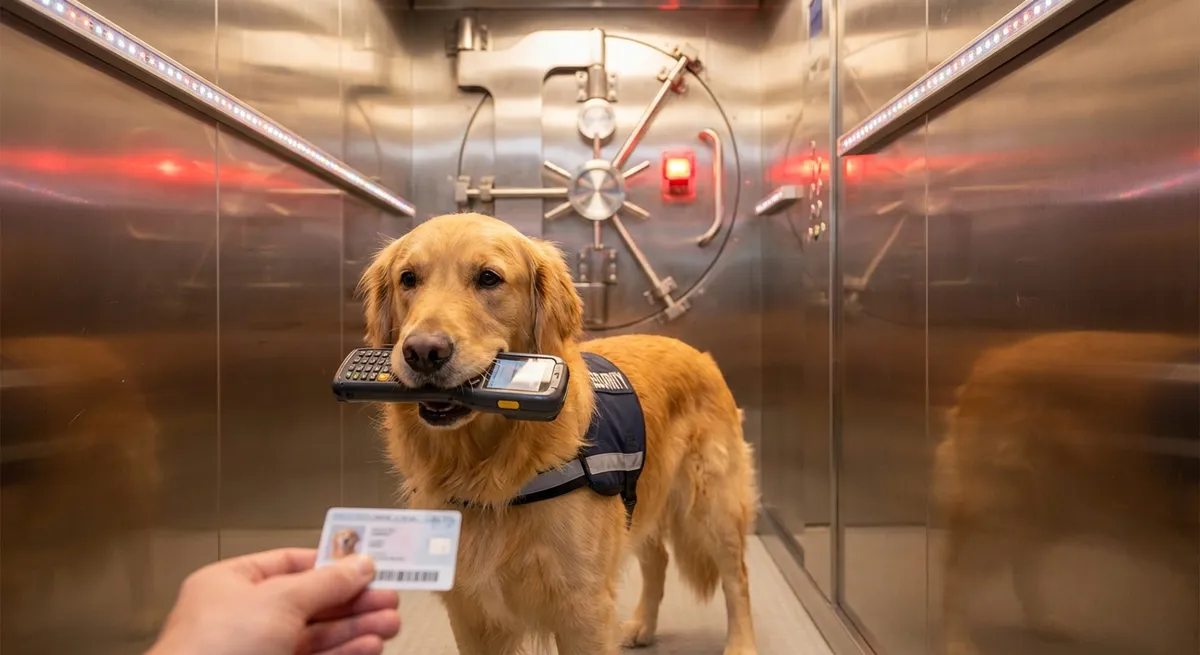
You think you’re overqualified for your job? Animals have been out here casually speed‑running evolution, rocking superpowers, and not even filling out a LinkedIn profile.
This is your backstage pass to the weird, flex-heavy side of the animal kingdom—where shrimp punch harder than you text, octopuses do high-stakes jailbreaks, and squirrels accidentally redesign forests. Read this, then try not to respect pigeons. I dare you.
The Shrimp That Punches Harder Than Your Last Breakup
Meet the mantis shrimp: a small, colorful sea goblin with the energy of “I will absolutely hit send on that risky text.”
This thing doesn’t “snap” its claws—it launches them like biological pistons. Its punch is so fast it literally boils the water around it, creating tiny collapsing bubbles called cavitation bubbles that generate shock waves. That means it basically punches twice: once with its claw, then again with the shock wave. Overkill? Absolutely. Necessary? Also yes, apparently.
Their strike clocks in at speeds comparable to a bullet leaving a gun, and the force can crack glass aquarium walls and smash crab shells like potato chips. Imagine ordering a peaceful little tropical shrimp and accidentally installing a tiny underwater wrecking ball.
And because that wasn’t enough, mantis shrimp also see colors humans can’t even imagine, thanks to up to 16 different photoreceptor types in their eyes (we have three). You’re out here squinting at the “blue vs green” dress while this shrimp is watching the Marvel Cinematic Universe in 4D Ultra IMAX.
Shareable flex: There’s a shrimp that can punch hard enough to cause localized boiling water and crack glass. You are not the strongest one in your kitchen.
Pigeons: Secret Navigation Gods in Trash Bird Costumes
Pigeons look like they’re running outdated firmware, but they’re actually elite-level navigators disguised as bread enthusiasts.
For centuries, humans used homing pigeons as literal living GPS systems to carry messages across absurd distances. These birds can find their way home from places they’ve never seen before, even over hundreds of miles. Meanwhile, you’ve used Maps to get to the same coffee shop three times.
How do they do it? Science suggests they use a combo pack of tools: the sun, landmarks, smell cues, and possibly Earth’s magnetic field like a built-in compass. Studies show they can even distinguish individual letters and basic patterns, which means some pigeons are technically reading more than your group chat.
Sure, they waddle. Sure, they walk like they’re wearing invisible heels. But under that city-bird energy is a precision-guided, multi-sensory navigation system that’s kind of terrifying.
Shareable flex: The bird you just called “sky rat” can navigate hundreds of miles using the planet’s magnetic field. You got lost in a mall parking lot.
Octopuses: Escape Artists with 8 Arms and Zero Respect for Locks
Octopuses are what happens when evolution gives up on bones and invests everything in brains and anxiety.
These squishy masterminds can squeeze their entire body through any gap slightly larger than their beak (the one hard part of their body). Aquarium staff have reported octopuses unscrewing jar lids, opening valves, and literally sneaking out of their tanks at night to raid nearby fish tanks like stealth criminals, then sliding back before morning checks.
Their problem-solving skills are wild: they can complete complex puzzles, navigate mazes, and remember solutions for weeks. Some species use coconut shells and shells as mobile homes—like little squishy hermits with designer luggage. Others camouflage so well they can vanish into coral, sand, or even mimic other animals.
Octopuses have also been known to deliberately squirt water at specific people or lights they don’t like. Not a reflex. A decision. If that’s not petty intelligence, what is?
Shareable flex: There are octopuses that open jars, escape tanks at night, raid food, and go back before anyone notices. Your sneaky fridge trips have competition.
Squirrels: Accidental Forest Architects with Terrible Memory
Squirrels are chaos in fur form, but unintentionally, they’re also the landscapers of entire ecosystems.
They bury nuts all over the place as their “emergency snacks,” then promptly forget where a ton of them are. This would just be embarrassing… except those forgotten snacks often grow into trees. Over time, that “oops” habit helps replant forests and spread tree species like oaks and hickories.
Research shows that the way squirrels scatter their food actually protects diversity in forests, because they don’t store everything in one place. Congratulations, the ADHD of the woodland world is low-key managing long-term forest regeneration.
They also switch to deception mode: when other squirrels are watching, they’ll pretend to bury nuts in fake spots to throw off thieves. That means they’re not just foraging—they’re strategizing, lying, and faking nut burials like tiny, furry con artists.
Shareable flex: Squirrels forget where they put their snacks and accidentally plant forests. You lost your keys and did not create an ecosystem.
Tardigrades: Tiny Things That Can Just… Pretend Death Until Space Is Over
Tardigrades (aka water bears) look like gummy worms with legs and the vibe of “harmless little guy.” Do not be fooled. These are survival bosses.
At less than 1 mm long, they live in moss, lichen, and random damp spots. But when conditions get bad—like no water, extreme heat, freezing cold, or radiation levels that would absolutely end your career—they basically hit the “BRB” button on life.
They enter a state called cryptobiosis, curling up into a dried-out ball called a tun. In this form, their metabolism drops to almost zero, and they can survive:
- Temperatures from almost absolute zero to well above boiling
- Crushing pressures stronger than in the deepest ocean trenches
- Radiation doses hundreds of times what would kill a human
- The vacuum of outer space
Scientists have literally launched tardigrades into space, fully exposed, and some just… came back and carried on like it was a weird Tuesday.
Shareable flex: There are tiny animals that can dry into a dust ball, survive in space, and then come back to life. You feel weird if the room is 2 degrees colder than usual.
Conclusion
Animals aren’t just cute background NPCs—they’re running full mythic-level builds with unlocked skill trees and no user manual. Mantis shrimp are punching reality, pigeons are doing Google Maps with their face, octopuses are pulling heists, squirrels are reforesting the planet by being forgetful, and tardigrades are ignoring the laws of existence.
Next time you see a random creature doing its thing, remember: it might secretly outclass you in navigation, strength, strategy, durability, or long-term environmental impact.
Treat them with respect. Or at least don’t call them “derpy” to their face. They might be the final boss.
Sources
- [BBC Earth – The mighty mantis shrimp](https://www.bbc.com/earth/story/20131216-the-mighty-mantis-shrimp) - Explains the speed and power of mantis shrimp punches and their unique vision
- [Smithsonian Magazine – How Do Pigeons Find Their Way Home?](https://www.smithsonianmag.com/science-nature/how-do-pigeons-find-their-way-home-151150/) - Breaks down the navigation abilities of homing pigeons
- [Scientific American – Octopuses Keep Surprising Us](https://www.scientificamerican.com/article/the-mind-of-an-octopus/) - Covers octopus intelligence, problem-solving, and escape behavior
- [National Park Service – Squirrels: Seed Dispersers](https://www.nps.gov/articles/squirrels-seed-dispersal.htm) - Describes how squirrels help regenerate forests through forgotten caches
- [NASA – Tardigrades in Space](https://www.nasa.gov/mission_pages/station/research/news/tardigrades/) - Details experiments on tardigrades surviving extreme conditions, including exposure to space