If you think your job is stressful, imagine going to work and your to‑do list says:
1) Sedate a 2,000‑kg rhino from a helicopter.
2) Dodge an angry chimp who remembers you gave him a needle last week.
3) Lure a leopard with Calvin Klein cologne like it’s New York Fashion Week.
That’s not a Netflix pitch—that’s real life for wildlife vets like Dr. Joel Alves, whose work (recently featured in stories about airlifting rhinos and using perfumes to catch big cats) is trending all over the internet right now. And honestly, it might be the most chaotic, heroic, and unintentionally hilarious job on the planet.
Let’s crack open the safari jeep of madness and peek inside.
The Vet Who Literally Drops In On Rhinos
Most vets: “Please bring your dog in at 3 p.m.”
Wildlife vet: “I’ll just lean out of this helicopter and tranquilize that rhino from the sky.”
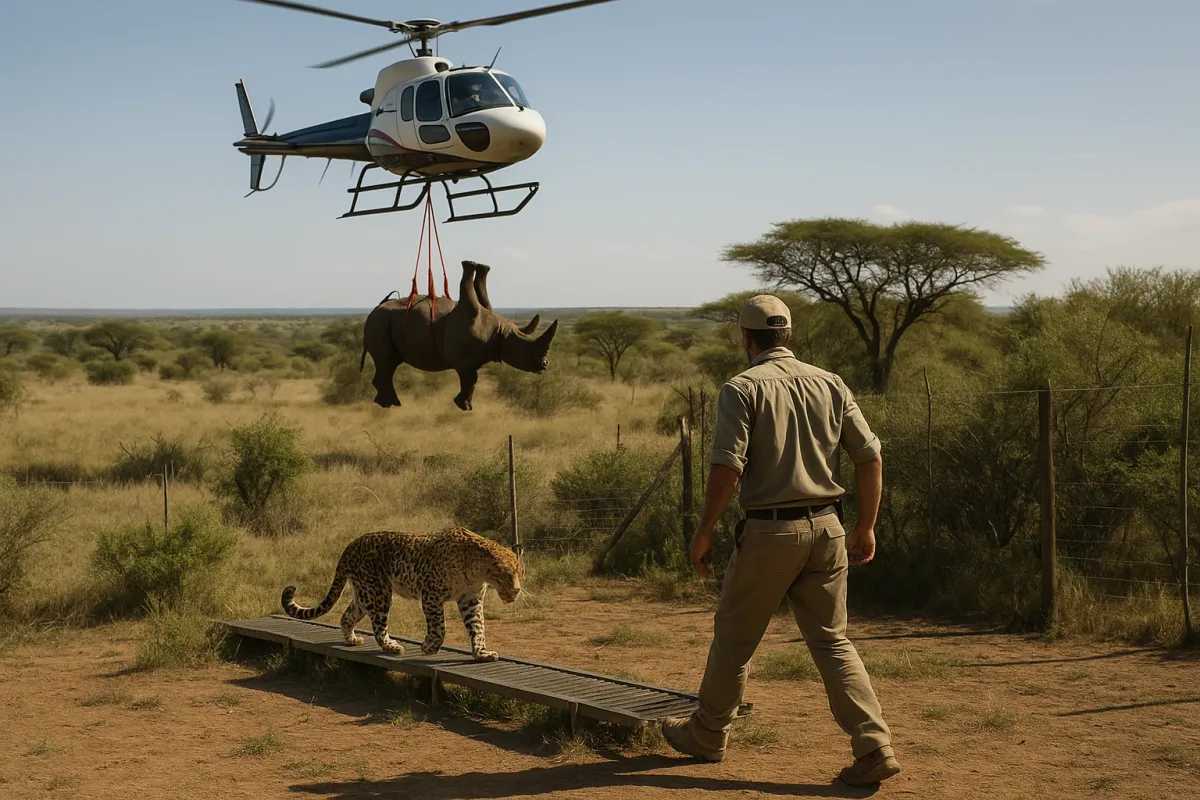
In current viral reports about wildlife vets in Africa, rhino relocations look like a Marvel crossover between Doctor Strange and National Geographic. To save rhinos from poaching hotspots, teams dart them from helicopters, blindfold them, and sometimes airlift them by their ankles to safer reserves. Yes, upside down. Yes, the rhino is fine. No, the rhino did not sign a waiver. The upside-down lift actually helps their breathing short‑term, and the whole operation is a race against time to keep heart rates stable, drugs balanced, and horns out of poachers’ reach. Meanwhile, the vet is doing math, monitoring vital signs, and trying not to think, “I went to school for how many years for this?”
Leopards Are Apparently Into Calvin Klein
In the ongoing “humans are weird, animals are weirder” saga, conservation teams and vets really do use Calvin Klein’s Obsession for Men to help lure big cats like leopards and jaguars. This detail keeps popping up in wildlife features and interviews—and yes, it’s real, and yes, it’s hilarious.
Here’s why it works: the perfume has a compound called civetone that smells suspiciously like wild animal musk. To leopards, this says, “Hey, what’s that mysterious stranger in my territory?” So vets and researchers spritz scent on tree trunks and strategically placed cameras. The leopards roll, rub, and generally throw themselves at the trees like it’s Tinder Live. While they’re busy being flirty with a bush, cameras roll, data gets collected, and sometimes vets can safely dart them for health checks or to move them away from conflict zones. Somewhere, a marketing intern is missing a huge “Official Cologne of Big Cats” campaign.
Chimp Revenge Is A Legit Career Hazard
One story that keeps surfacing in wildlife vet interviews: chimps hold grudges. Actual, long‑term, personally targeted grudges.
When vets dart chimps for medical treatment, the chimps don’t just forget. They memorize faces like little fuzzy mob bosses. Next time the vet shows up in the forest? There can be side‑eye. There can be poop‑throwing. There can be coordinated “branch mysteriously drops near your head” moments. Vets talk about having to move in fast, stay unpredictable, and never underestimate an animal that’s basically a very strong, very agile, resentful toddler with tree access. It’s funny until you realize you’re the only squishy, clawless primate in the room.
Butterfly Surgery Is A Thing, And It’s Adorably Intense
On the other end of the chaos scale, some wildlife vets go from darting rhinos to… repairing butterfly wings with tweezers and glue. Yes, the same career that requires tranquilizer darts also occasionally requires arts-and-crafts skills and the emotional stability to not cry over a tiny monarch.
Recently highlighted in that viral wildlife‑vet photo series, these procedures use lightweight materials like coffee filters or other butterfly wings to patch damaged ones. It’s delicate, time‑consuming, and the patient can’t exactly follow instructions like “please hold still” or “breathe deeply.” But for vets, it’s all the same mission: if an animal can be helped, you try. Plus, it’s impossible not to share a before‑and‑after story where a broken little wing becomes a flying confetti of victory. Internet, meet your next “faith in humanity restored” post.
The Job Is 10% Glamorous Photos, 90% Mud, Sweat, And Poop
Those stunning viral images—the rhinos mid‑airlift, the foggy savannah, the dramatic helicopter chases—look like a cologne ad directed by David Attenborough. The reality, as vets keep emphasizing in interviews and behind‑the‑scenes posts, is much less glamorous and much more… sticky.
There’s the paperwork for every sedative used. The hours of tracking animals that absolutely do not want to be found. The 3 a.m. emergency calls because an elephant wandered into farmland, or a lion got snared in a poacher’s trap. There’s the heat, the cold, the broken radios, the flat tires, and the omnipresent risk that a very large, very wild animal will suddenly decide it’s done being cooperative. But there’s also the payoff: a de‑snared lion walking free, a rhino safe in a new reserve, a population of leopards monitored and protected instead of disappearing.
And that’s why these stories are going viral right now: in a world full of doomscrolling, this kind of “chaotic good” work hits the sweet spot between “I can’t believe this is real” and “thank goodness it is.”
Conclusion
Wildlife vets might have the only job on Earth where “sorry I’m late, a giraffe sat on my equipment” is a valid excuse. From airlifting rhinos to tricking leopards with designer cologne, their daily chaos is part action movie, part emergency room, part emotional roller coaster.
Next time you see one of those viral shots—rhino dangling from a helicopter, leopard rubbing on a perfume‑soaked tree, or a vet crouched over a butterfly with tweezers—remember there’s a whole team behind it, racing against extinction with anesthesia, science, and a sense of humor.
And if your boss ever complains about your performance, just show them a picture of a vet being side‑eyed by a darted chimp and say, “At least my clients don’t hold lifelong grudges and throw branches at my head.”