
If you laughed at a four-second video of a raccoon dramatically dropping its hotdog today, congratulations: your brain has officially been hijacked by the modern comedy multiverse. We’re living in an era where a single unhinged comment, cursed photo, or accidental Zoom fail can travel faster than your motivation on a Monday morning. And honestly? It’s kind of beautiful.
Let’s dissect why the dumbest little moments now feel like Oscar-winning comedy — and why you keep sending them to everyone you know instead of responding to your actual emails.
1. The New Comedy Club Is Your Group Chat (And Everyone’s Bombing On Purpose)
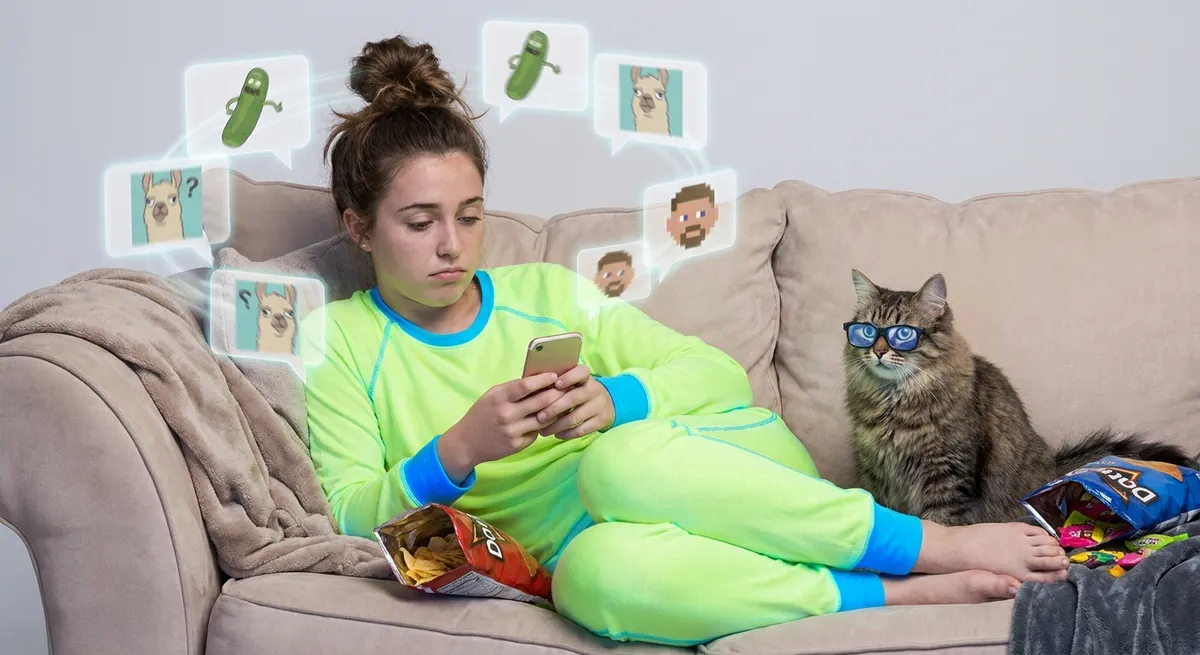
Somewhere along the way, group chats quietly replaced stand-up comedy. No two-drink minimum, no stage, just your friend at 1:37 a.m. sending, “What if clouds are just sky furniture?” and 12 crying-laugh reactions.
The real joke isn’t even the meme — it’s the escalation. Someone sends a mildly funny TikTok. Another person replies with a cursed screenshot. A third drops a voice note where they’re wheezing so hard they sound like a broken accordion. Suddenly, nothing is actually that funny, but you’re crying anyway because your brain is doing group project improv and refusing to be normal.
The best part? The “bit” never ends. It mutates. A random typo becomes an inside joke that haunts the chat for two years. A badly cropped photo resurfaces every time someone has a minor inconvenience. Your friendship isn’t built on shared interests anymore; it’s built on a shared willingness to be publicly unhinged in a semi-private setting.
Shareable angle: Tag your group chat and ask: “Who’s the unhinged one that sends 47 memes before 9 a.m.?” (It’s you. You are the problem.)
2. Micro-Comedy: Why 3-Second Clips Are Funnier Than Actual Movies
You ever realize you’ve watched a serious, respectable movie for two hours and didn’t laugh once — but then giggled at a 3-second clip of a cat missing a jump and walking away like it pays rent?
Modern humor lives in the micro-moment:
- A single badly timed sneeze in a quiet room
- One frame of a dog making eye contact like it owes you money
- A text that just says “hey” followed by “nvm” with no explanation
Our brains are drowning in content, so short, punchy chaos is the emotional espresso shot we keep slamming. There’s no build-up, no plot, just instant payoff. Joke. Hit. Gone. Another joke. Another hit. Will our attention spans recover? Unclear. Did you even finish this paragraph or did you skim it looking for the next funny bit? Exactly.
Micro-comedy also gives us something movies can’t: replay addiction. You watch the same 4-second video 23 times in a row because the exact millisecond someone’s soul leaves their body from embarrassment is peak art. Scorsese could never.
Shareable angle: Post your most re-watched 3–5 second clip and ask people, “Why does this own more real estate in my brain than my high school education?”
3. Accidental Main Plot: When Background People Steal The Entire Scene
The funniest person in a video is almost never the one talking. It’s:
- The woman in the back trying to quietly exit with a grocery cart that immediately squeaks
- The guy who realizes he’s on camera and does that stiff “act normal” walk like he just learned how legs work
- The kid in the corner vibing to a completely different song in their head
We love unintentional comedy because it feels honest. Nobody’s performing. No one’s trying to “go viral.” Someone just trips over absolutely nothing and then pretends to jog like that makes it less embarrassing. This is cinema.
The internet will find these background gremlins, zoom in, add chaotic captions, and gift them a whole personality arc. Suddenly, “man in green shirt from 0:03” has fan edits, lore, and a nickname. He didn’t ask for a fandom. The fandom arrived anyway.
That’s the viral sweet spot: the moment where real life glitches, the universe forgets to load the “dignity” patch, and someone’s brain visibly reboots in HD.
Shareable angle: Share a video and tell people, “Don’t watch the main person. Watch the guy in the back.” Chaos will be discovered.
4. The Relatable Meltdown: Comedy As Group Therapy With Worse Chairs
Once upon a time, people wrote in diaries. Now we film ourselves at 2 a.m. saying, “Does anyone else feel like a Sim whose player keeps canceling all their actions?” and put it online for millions.
Relatable comedy is basically emotional crowd-sourcing. You confess something that feels extremely specific and unhinged like, “I rehearse entire arguments in the shower and still lose them in real life,” and 300,000 strangers go, “Wait, are you in my walls?”
Somehow, this shared embarrassment is soothing. If we’re all weird, then no one’s weird. We’re just one massive, chaotic brain experiencing:
- Social anxiety
- Random intrusive thoughts
- The urge to dramatically restart our lives every Monday
Jokes about burnout, scrolling at 3 a.m., and procrastinating so hard you get tired from not doing anything — they hit because modern life feels like a bad sitcom written by overworked interns. Laughing at it is our way of saying, “Yes, this is ridiculous, but at least we’re ridiculous together.”
Shareable angle: Post a “too real” joke and ask: “Is this funny or is this a cry for help?” (Plot twist: it’s both.)
5. The Unpolished Era: Why The Funniest Stuff Looks Technically Terrible
The internet rejected high-production comedy in favor of “I filmed this on a potato while sprinting.” Shaky camera? Hilarious. Weird angle? Even better. Bad lighting? Comedy seasoning.
Professional sketches still hit, but the clips that explode are:
- A chaotic front-camera video at 0.5x zoom
- A dad yelling from another room while the camera’s pointed at the ceiling fan
- Someone whispering commentary so they don’t get caught filming
We trust messy. It feels like we stumbled into a moment we weren’t supposed to see, instead of watching something carefully scripted. Our brains go, “Ah yes, this is authentic nonsense. Delicious.”
The “bad” aesthetic also sends a subtle message: “You don’t need a studio. You need one unhinged idea and apparently zero shame.” That’s why we share it. We’re not just saying “this is funny.” We’re saying, “Look, absolutely anything can be content. You too can accidentally become the internet’s favorite chaos goblin.”
Shareable angle: Find the funniest low-quality video on your camera roll and post it with: “Oscar voters fear me.”
Conclusion
Modern comedy is less “sit down and watch this 90-minute special” and more “I laughed 14 times in a row at unrelated tiny disasters.” Background people stealing the scene, cursed 3-second clips, group chat chaos, emotional oversharing, and badly filmed masterpieces — we’re not just consuming this stuff, we’re co-writing it.
If life feels like a glitchy beta version of a game that never got properly tested, the least we can do is record the bugs and add unhinged subtitles.
Now go text this article to your friend who sends 90% of your memes and tell them: “This is basically about you.”
Sources
- Pew Research Center – Social Media Fact Sheet – Data on how people use social media, including shifts in content consumption and sharing
- The New Yorker – How Memes Became the Language of the Internet – Explores why memes and short-form humor dominate online communication
- BBC Future – Why We Laugh: The Science of Laughter – Breaks down the psychology and social bonding power behind humor
- MIT Technology Review – TikTok and the Evolution of Short-Form Video – Looks at how ultra-short videos have reshaped attention spans and comedy formats
- American Psychological Association – The Social Benefits of Humor – Discusses how humor and shared laughter contribute to mental health and connection