
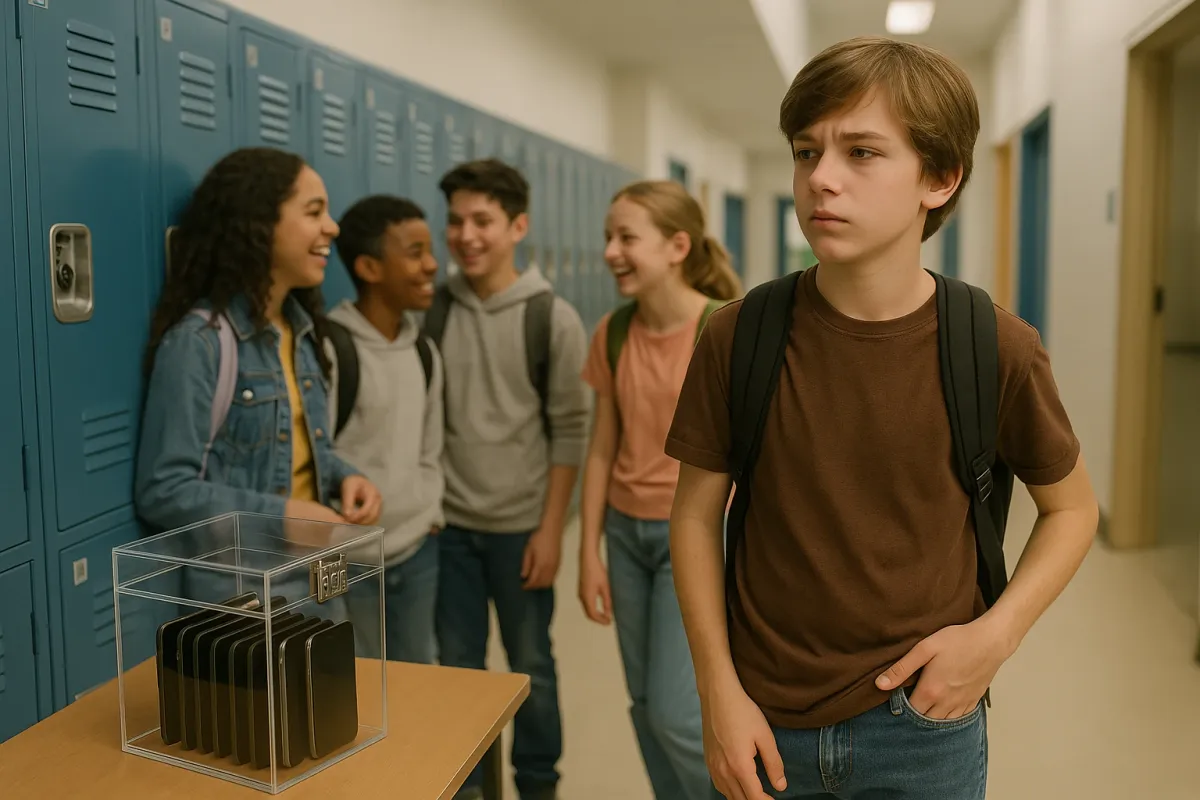
Some towns build playgrounds. Others build malls. One tiny town in Spain just built… a smartphone ban for kids under 16. Yep, in 2025, when toddlers can unlock an iPhone faster than you can, families in Pobla de Segur (real place, not a Harry Potter village) just voted to say, “No phone for you, small human.”
Parents there are so worried about social media, addiction, and kids doomscrolling before they can do long division that they’ve basically formed a real‑life “No iPad at the restaurant” alliance. And the wild part? Science is kinda on their side—in some seriously weird ways.
Let’s dive into the strangest facts about what happens to kids, brains, and society when you take the phone away… and why this little Spanish town might accidentally be the future.
1. A Whole Town Just “Unplugged” Kids… By Group Chat
Pobla de Segur, in Catalonia, didn’t pass some giant government law with a dramatic vote in parliament. No, parents basically organized on WhatsApp (the irony) and agreed:
“We’re not getting our kids smartphones until at least 16.”
So now, an entire generation of kids in this town is growing up phone‑less on purpose. Not because they’re grounded, not because they dropped it in the toilet, but because parents made a collective pact.
Weird fact: researchers have long said one of the hardest parts of limiting kids’ screen time is “but all my friends have one!” This town just hacked that: if nobody’s kid has a phone, there’s no FOMO. It’s like when everyone in school had ugly uniforms and suddenly fashion pressure just… died.
Also weird: there’s already a growing movement like this in other places. In the US and UK, you’ve got campaigns like “Wait Until 8th” telling parents to hold off on phones until at least 8th grade. It’s like Dry January, but for smartphones and infinitely less fun for 13‑year‑olds.
2. Kids Without Phones Might Actually Sleep Like It’s 1995
You know how blue light messes with your sleep? That’s not myth, that’s hard science. Multiple studies (including one in JAMA Pediatrics) have found that kids who scroll late at night sleep less and worse, which, shocker, makes them more tired, anxious, and grumpy.
Now imagine a whole town of kids who:
- Don’t have TikTok under their pillow
- Aren’t secretly texting at 2 a.m.
- Can’t watch “just one more” YouTube short for three hours
Weird but true: there’s data showing that just having a phone in the bedroom (even if it’s off) is linked to worse sleep because your brain knows it’s there like a digital goblin whispering, “Check meee.”
So if you grow up in Pobla de Segur right now, your nightlife looks like:
- Actual sleep
- Maybe reading a book
- Maybe staring at the ceiling contemplating the meaning of life (vintage!)
There’s a decent chance these kids will be the first generation in years whose natural bedtime isn’t “when the next autoplay stops.”
3. No Phone = Better Grades? The Weird “Distraction Tax”
Here’s where it gets spicy. Big studies in the UK have shown that when schools ban phones, test scores go up—especially for students who were already struggling. One study by the London School of Economics looked at phone bans in British schools and found improvement equal to adding an extra week of class each year.
That’s… a lot from just “put the phone away.”
Think of the smartphone as a tiny chaos gremlin that steals five seconds every time a notification pops up. Now multiply that by hundreds of times a day. Researchers call it “attention residue”—even when you stop checking, your brain is still thinking about whatever you saw last.
Pobla de Segur just removed the gremlin from kids’ pockets entirely. That means:
- No “just checking” during homework
- No secret gaming under the table
- No group chat meltdown mid‑math problem
Weird brain fact: every time you switch tasks, your brain burns extra energy. So yeah, your phone is literally making you mentally tired from all the bouncing around. These phone‑free kids might not be smarter, but their brains are doing fewer gymnastics just to focus on one thing.
4. The Awkward Truth: Bored Kids Get Weirdly… Creative
Parents love to say, “Kids today never get bored.” They’re right—and that might be a problem.
Psych studies have found that when people are bored, their brains start wandering and linking random ideas together. That “mind‑wandering” is a key part of creativity. In one experiment, people who did a super boring task (reading a phone book, basically torture) came up with more creative ideas right after.
So what happens when kids in this smartphone‑ban town:
- Sit on a bench with nothing to scroll
- Wait for the bus without Candy Crush
- Get through dinner without YouTube
They might:
- Invent weird games
- Learn actual hobbies
- Start bands that sound like someone hit AI with a flute and a drum set
There’s a good chance future historians will say:
“Great artists of the 2040s came from two places: Pobla de Segur… and people whose parents forgot the Wi‑Fi password for three years.”
Also, a fun plot twist: half of our current tech billionaires grew up before smartphones existed. So the next wave of geniuses may not be the ones with the most apps… but the ones who spent childhood throwing rocks at stuff and thinking.
5. The Biggest Side Effect Might Be… Less Anxiety (But More FOMO For Adults)
Let’s be honest: half of adult social media use is:
- Comparing your life to someone’s vacation
- Wondering why your lunch doesn’t look like that
- Feeling vaguely sad for no clear reason after 20 minutes of scrolling
Now scale that down to a 12‑year‑old whose biggest crisis should be “Did my crush see my new hoodie?” not “Why does everyone else’s life look perfect?”
Research from places like the American Psychological Association and studies on Instagram and teen mental health keep finding similar patterns: more time on social apps = more anxiety, especially for young girls. Heavy social media use has been linked with higher rates of depression, self‑esteem issues, and body image problems.
In Pobla de Segur, those kids:
- Aren’t seeing 400 edited selfies a day
- Aren’t tracking likes as if it’s their blood pressure
- Aren’t getting algorithm‑fed drama 24/7
Weird twist: it’s the parents now dealing with FOMO—because they’re the ones still glued to WhatsApp, reading headlines, and doomscrolling about the very thing they just banned for their kids.
So the new family dynamic is:
- Kids: out playing, reading, existing in analog
- Parents: “I just read three articles about screen time while looking at my screen, help”
Plot twist of the decade: the no‑phone kids might end up mentally healthier than their absolutely online parents.
Conclusion
Somewhere in Spain right now, a group of kids is living the nightmare of every modern tween: they have no smartphone… and it might secretly be the biggest power‑up of their lives.
This tiny town just turned itself into a live‑action experiment in:
- What happens when kids grow up mostly offline
- How brains behave without constant pings
- Whether boredom, sleep, and real‑life drama can actually beat TikTok
Is this the future? Or just one very determined village fighting the entire internet with pure vibes and parental group chats?
Either way, send this to:
- The friend who says, “Kids these days are always on their phones”
- The parent who googles “screen time effects” at 1 a.m.
- The teen who’s currently reading this on 3% battery and rage‑nodding
Because somewhere out there, a bunch of kids are discovering what life is like before the scroll—and the weirdest fact of all is: science kinda thinks they might win.