
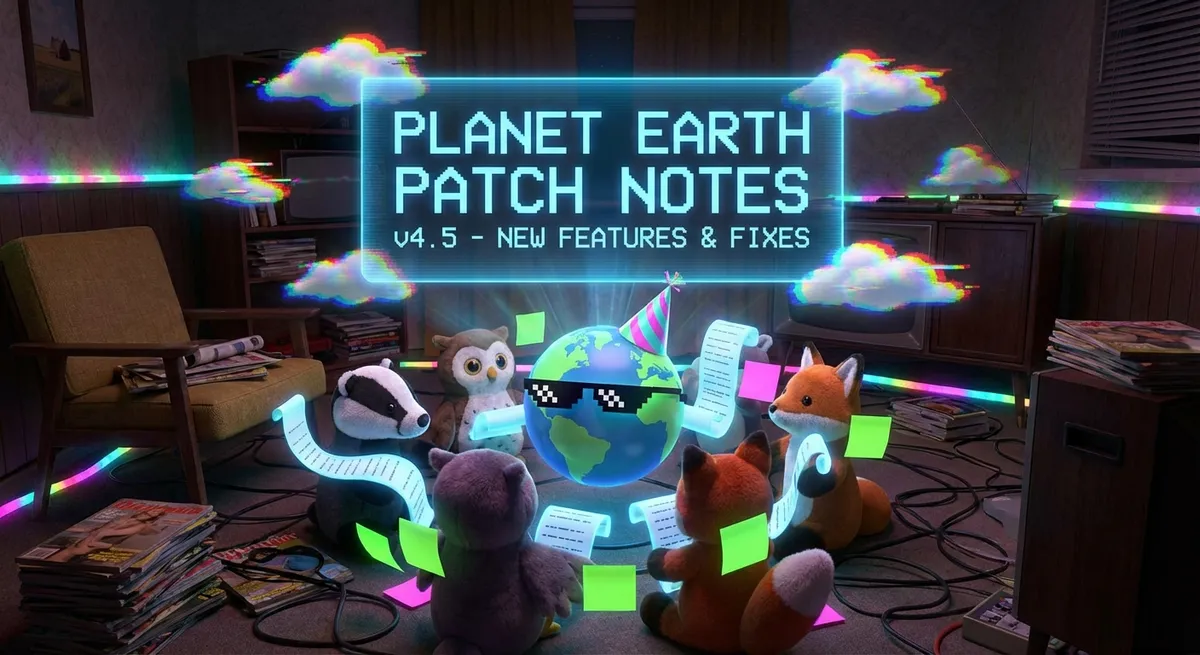
Earth is basically running on beta software. Someone, somewhere in the cosmic IT department, clearly said “Eh, ship it” and now we’re all stuck on a planet where frogs can freeze and reboot, metal can remember its shape, and a fungus is out here cosplaying as a zombie overlord.
These are the kinds of facts that make you pause, stare into the middle distance, and then immediately send them to three friends with “??? BRO read this.”
Let’s explore five gloriously unhinged “features” baked into reality.
1. There’s a Fungus That Turns Insects Into Real-Life Zombies
Nature looked at horror movies and said, “Cute. Hold my petri dish.”
Enter Ophiocordyceps, a parasitic fungus that infects insects like ants, hijacks their brains, and makes them climb up high where they clamp onto leaves or twigs. Then the fungus bursts out of their bodies like it’s auditioning for a sci-fi movie and rains spores down on more unsuspecting insects. It’s basically The Last of Us, but with more legs and less Pedro Pascal.
The wild part? The fungus doesn’t just kill the insect—it puppeteers it. Studies show it invades muscles and nervous tissue, steering the host like a stolen car before finally cashing in the insurance claim. Somewhere in a forest right now, a tiny zombie ant is following orders from a mushroom overlord, and you’re here struggling to follow a GPS.
This is when you realize: humans think we rule the world, but fungi are quietly writing the expansion pack.
2. Your Heart Has Its Own Mini-Brain (And It’s Kinda Independent)
You know how people say, “Follow your heart, not your head”? Weirdly, your body sort of agrees.
Your heart has its own little nervous system called the cardiac intrinsic nervous system—sometimes described as a “mini-brain.” It can coordinate beats, react to signals, and keep things mostly functional even when the brain’s offline. Doctors can literally keep a heart beating outside the body during transplant procedures. No brain. Still vibing. Just pumping away like, “I do not get paid enough for this.”
It talks with your actual brain through nerves and hormones, but it’s not just a passive sponge. It sends information back up too, influencing emotions, stress responses, and even decision-making. So that horrible texting decision at 2:14 a.m.? That might’ve been a group project between your brain, your heart, and two margaritas.
Humans: “We’re logical, rational beings.”
Also humans: possess multiple semi-autonomous organ brains that collectively decide whether we cry at dog commercials.
3. There’s A Lake So Toxic It Literally Turns Animals Into Statues
Lake Natron in Tanzania looks like something a supervillain would design as office decor.
The water is extremely alkaline, with a pH that can go up to 10.5—about the same as ammonia. It’s also rich in salts that can calcify animals that die in or near it. Birds that land in the wrong place get preserved, their bodies turning into eerie, statue-like remains. Photographer Nick Brandt even captured haunting images of these “stone animals” posed along the shore like some goth version of Pinterest.
Here’s the plot twist: some species actually like it there. Flamingos nest around the lake because the harsh chemistry helps keep predators away. It’s basically a murder lagoon for most creatures, and a gated community for flamingos.
Imagine a place so hostile reality goes, “Okay, fine, you’re art now,” and just permanently preserves you.
4. Tardigrades Are Tiny Space-Tank Gremlins That Refuse to Die
If Earth had a “Most Likely to Survive the Apocalypse” yearbook, tardigrades would be on the cover.
Also known as water bears, these microscopic weirdos look like plush toys designed by an eldritch god. Cute-ish, chunky, eight flappy legs—and functionally immortal on “hard mode.”
Tardigrades can:
- Survive being frozen just above absolute zero
- Endure temperatures above boiling
- Tank radiation levels that would obliterate a human
- Handle the vacuum of outer space
- Chill for decades without water, then rehydrate and stroll off like nothing happened
They do this by entering a state called cryptobiosis, basically hitting save, quitting the game, and reloading later when conditions improve. Their bodies dry out, their metabolism nearly stops, and their DNA gets wrapped in protective molecules like bubble wrap for existence.
Some scientists even fired them into space, exposed them to vacuum and cosmic radiation, and… they just came back fine. Didn’t even leave a bad review. Meanwhile, we complain when the Wi-Fi drops to two bars.
5. There’s Metal That Remembers Its Shape Like It Has Muscle Memory
You know how you forget where you put your keys? Metal doesn’t.
At least, not certain types called shape memory alloys—like Nitinol (nickel-titanium). You can twist, bend, or crumple them, and when heated, they snap back to their original shape like a grudge with a temperature trigger.
This isn’t a magic trick; it’s physics showing off. On a microscopic level, the crystal structure of the metal can shift between phases. At one temperature, it’s super bendy. At another, the original structure reasserts itself and drags the whole thing back into its “default form.” It’s like if your phone charger remembered it was supposed to be untangled.
This tech shows up in:
- Medical stents that expand inside blood vessels
- Glasses frames that survive being sat on
- Tiny actuators in robots and aerospace gear
So somewhere out there, robots and medical devices are powered by revenge metal that refuses to accept your shenanigans.
Conclusion
If you ever feel like life is a little too boring, remember:
- A fungus is out there playing puppeteer with insects.
- Your heart is a semi-independent roommate.
- A lake is turning birds into accidental art installations.
- Tardigrades are casually unlocking God Mode.
- And metal has a better memory than you do.
Earth isn’t normal. It’s a chaotic sandbox full of features that feel like they were added at 3 a.m. by a sleep-deprived cosmic developer.
Now go confuse your friends: send them this, then text “We live in DLC.”
Sources
- [CDC - Fungal Diseases: Ophiocordyceps](https://www.cdc.gov/fungal/diseases/index.html) - General fungal disease info and background on pathogenic fungi
- [National Institutes of Health (NIH): The Heart’s ‘Brain’](https://www.ncbi.nlm.nih.gov/pmc/articles/PMC3528184/) - Research article explaining the intrinsic cardiac nervous system
- [National Geographic: Lake Natron Turns Animals into Stone](https://www.nationalgeographic.com/photography/article/131031-lake-natron-birds-tanzania-photos) - Photo essay and explanation of Lake Natron’s eerie calcified animals
- [NASA: Tardigrades in Space](https://astrobiology.nasa.gov/news/tardigrades-survive-exposure-to-space/) - Coverage of experiments showing tardigrades surviving space conditions
- [NASA Glenn Research Center: Shape Memory Alloys](https://www.nasa.gov/directorates/glenn/technology/shape-memory-alloys/) - Overview of shape memory alloys and their applications in aerospace and beyond