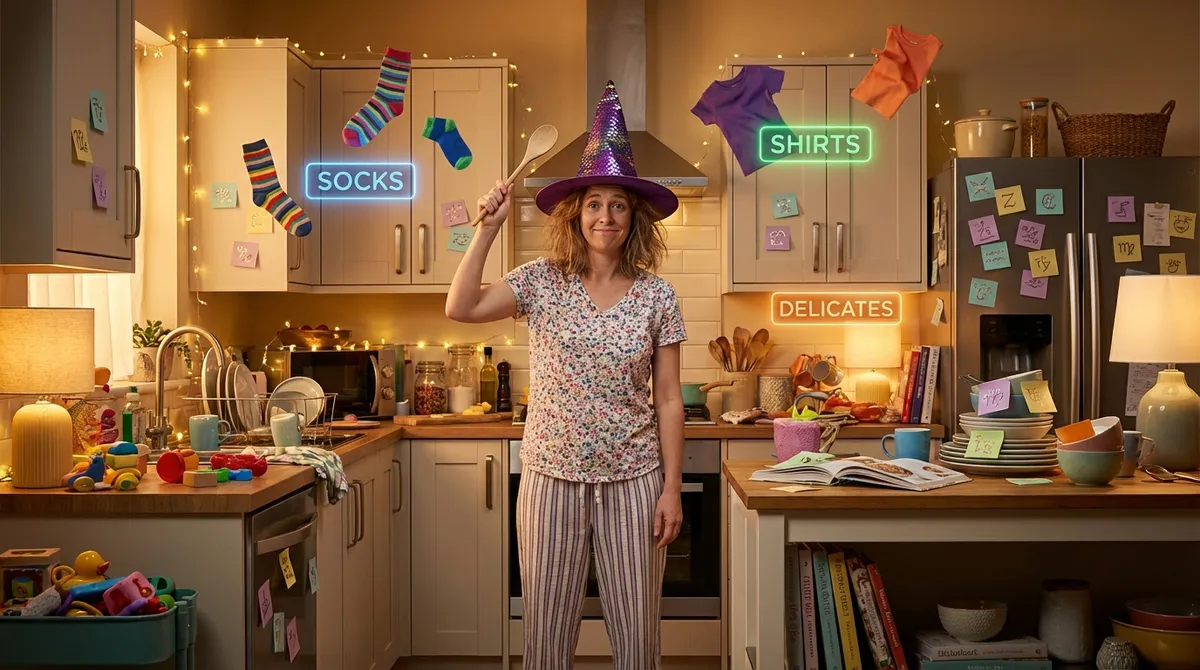
If you’ve ever looked around your home and thought, “This place has the same energy as a group project five minutes before the deadline,” welcome. Today we’re not talking about productivity (boring) or optimization (yawn). We’re talking about low-key sorcery: tiny, ridiculous life upgrades that feel like you’re cheating at adulthood… but you’re not.
These aren’t generic “drink water” tips. These are “why did nobody tell me this 10 years ago” hacks that make you look suspiciously put-together while you’re internally buffering.
1. The “Future You Is A Goblin” System (aka Pre-Clean Your Tomorrow)
Let’s be honest: Future You is a liar who says, “I’ll do it later,” and then mysteriously never shows up. So stop trusting Future You and start trapping them.
Instead of “cleaning,” run a 90-second sabotage ritual at night, but only in three spots:
- The surface you see first in the morning (nightstand, desk, kitchen counter)
- The one chair or couch spot you always sit in
- The bathroom sink area
- Dump trash
- Stack or corral random stuff into one container
- Wipe once with anything vaguely absorbent (paper towel, old shirt, the tears of your past decisions)
- Your brain treats “clean first sight” like a system reboot. Environmental psychology shows visual clutter can mess with focus and stress levels.
- You’re not cleaning your whole house—just the loading screen your brain sees first.
Your only job: remove obvious chaos from that specific zone:
Why this works:
Bonus evil move:
Leave one small, easy, visible task for Morning You (like a mug and coffee pod together). When you complete it, you trick your brain into a “we are capable, apparently” vibe, which is basically free serotonin.
Share factor:
Everyone has a chaotic chair. Tag your friend whose chair has not seen daylight since 2022.
2. The Snack Decoy Strategy (Outsmarting Your Own Hand)
Your hand is the real problem. Your brain says, “Let’s be healthy,” and your hand says, “What if… chips.” So stop negotiating and start rigging the arena.
Here’s the move:
- Put your default snack in the most annoying location possible. Top shelf. Back of cabinet. Behind that weird baking dish you never use.
- Put your slightly better snack in “I could grab this without thinking” territory: front of fridge, middle shelf, desk drawer, next to your couch.
- Pre-cut fruit or veggies (store them in clear containers, not the witness protection program drawers)
- Nuts in small containers (not the Costco-for-giants bag)
- Popcorn instead of chips
- Dark chocolate instead of the entire candy aisle
- Research shows we eat more of what’s visible and easy to reach. Convenience wins every time, so just change what’s convenient.
- You’re not banning “bad” snacks. You’re making them a minor side quest instead of a default.
Examples of “slightly better” snacks:
Why this works:
Bonus chaotic touch:
Use tiny bowls. When the bowl is empty, that’s a given snack “episode.” Refilling it is now a conscious decision, not an autopilot trip.
Share factor:
Tag the person who calls a family-sized bag of chips “one emotional serving.”
3. The Wardrobe Autopilot: One Outfit That Always Works
Decision fatigue is real. No one wants to solve the equation “what goes with this shirt?” at 7:13 a.m. when your brain is still on airplane mode.
Create one emergency outfit formula that:
- You always feel at least 7/10 in
- Works for 80% of your life (work, errands, surprise social plan you agreed to and instantly regretted)
- Is easy to wash and hard to wrinkle
- Black jeans + solid color top + one “signature” thing (jacket, necklace, cool shoes)
- Plain t-shirt + overshirt (flannel, button-down, cardigan) + neutral pants
- For WFH: “Business on top, goblin on bottom” (nice top + comfy shorts or sweatpants)
- Keep those pieces stored together like a superhero costume.
- When life says, “You have 12 minutes to look like you have your life together,” you just… equip preset #1.
- Studies on decision fatigue show the more choices you have, the worse your decisions get over the day.
- This removes one whole category of chaos from your mornings.
- Build 2–3 versions of this uniform in different colors.
- Friends will think you’re “minimalist and aesthetic.” You are actually just “tired and efficient.”
Example formulas:
Now:
Why this works:
Next level:
Share factor:
Send this to someone whose “I have nothing to wear” closet is physically full and emotionally empty.
4. The Inbox Fake-Out: Subject Lines That Boss People Around (Nicely)
Most email advice is like “hit inbox zero.” Bold of them to assume you’re even at inbox four digits yet. Instead, try making your emails do more work for you with how you title them.
Subject line templates that secretly organize your life:
- “[ACTION NEEDED BY (DATE)] Task: X”
Forces the other person (and future you) to see what this is and when it matters.
- “CONFIRMING: (Short clear phrase)”
Good for: “I swear we agreed on this, right?”—and way less chaotic to search later.
- “INFO ONLY: (Topic)”
Tells people: “You do not have to respond to this.” Your reply rate drops (in a good way).
- “DECISION REQUEST: Option A vs B”
Perfect for bosses, clients, or that friend who takes three business years to pick a restaurant.
Why this works:
- Clear labeling makes it easier to search later, instead of spending 10 minutes typing “that one email about the thing.”
- People are more likely to respond quickly when it’s obvious what you want.
Bonus hack:
At the end of your email, write:
“TL;DR:” followed by a one-sentence summary.
It’s polite. It’s efficient. And you look like a professional instead of a chaos pigeon slamming the send button.
Share factor:
Tag the friend whose emails are novels with subject lines like “hey” and nothing else.
5. The “Micro-Upgrade” Rule: Never Leave A Room Empty-Handed
Welcome to fake productivity, where you appear wildly efficient while doing almost nothing.
New rule: Every time you leave a room, take one item that does not belong there and move it closer to where it should live. Not perfectly put away. Just closer.
Examples:
- Leaving the living room? Grab the mug and drop it in the sink.
- Heading to your bedroom? Take that random hoodie from the back of a chair.
- Going to the kitchen? Scoop up two pieces of mail, drop them on the “deal with this later” pile.
- Clutter usually happens in layers. You’re just peeling one layer at a time—while you were already moving anyway.
- Over a week, this low-effort shuffle quietly resets your space from “dragon hoard” to “human habitat.”
Why this works:
Level-up variation:
Pick one category per week to hunt down as you roam:
- Week 1: All cups and mugs
- Week 2: Random cords and chargers
- Week 3: Stray socks living their best single life
You don’t have to schedule “cleaning day.” You just piggyback off your natural “walk around aimlessly” habits.
Share factor:
Send this to someone whose house looks clean until you open literally any drawer.
Conclusion
Adulthood is mostly improvising, Googling how long chicken lasts in the fridge, and pretending you “have a system.” These hacks aren’t about becoming a flawless productivity robot; they’re about quietly outsmarting your own chaos using tiny moves that compound over time.
Pick one of these and try it for a week:
- The 90-second night sabotage ritual
- Snack decoy setup
- Emergency outfit formula
- Bossy subject lines
- One-thing-per-room migration
You don’t need a personality overhaul. You just need a few sneaky upgrades that make people say, “Wait… when did you get your life together?”
(You didn’t. You just finally stopped trusting Future You.)
Sources
- [American Psychological Association – Stress and Decision-Making](https://www.apa.org/news/press/releases/stress/2015/decision-making) – Explores how stress and cognitive overload affect everyday choices and behavior
- [Princeton University – The Cost of Clutter on Attention](https://princeton.edu/~mhuss/Clutter%20Affects%20Ability%20to%20Focus.pdf) – Research on how visual clutter competes for attention and impacts performance
- [Harvard T.H. Chan School of Public Health – Healthy Snacking](https://www.hsph.harvard.edu/nutritionsource/healthy-eating-plate/snacks-and-healthy-snacking/) – Practical guidance on structuring smarter snacks without going full diet culture
- [Mayo Clinic – Decision Fatigue Overview](https://www.mayoclinic.org/healthy-lifestyle/adult-health/expert-answers/decision-fatigue/faq-20057815) – Explanation of decision fatigue and why simplifying routine choices helps
- [U.S. Department of Labor – Email Best Practices](https://www.dol.gov/general/jobs/email-etiquette) – Official tips on effective email communication and clear subject lines