
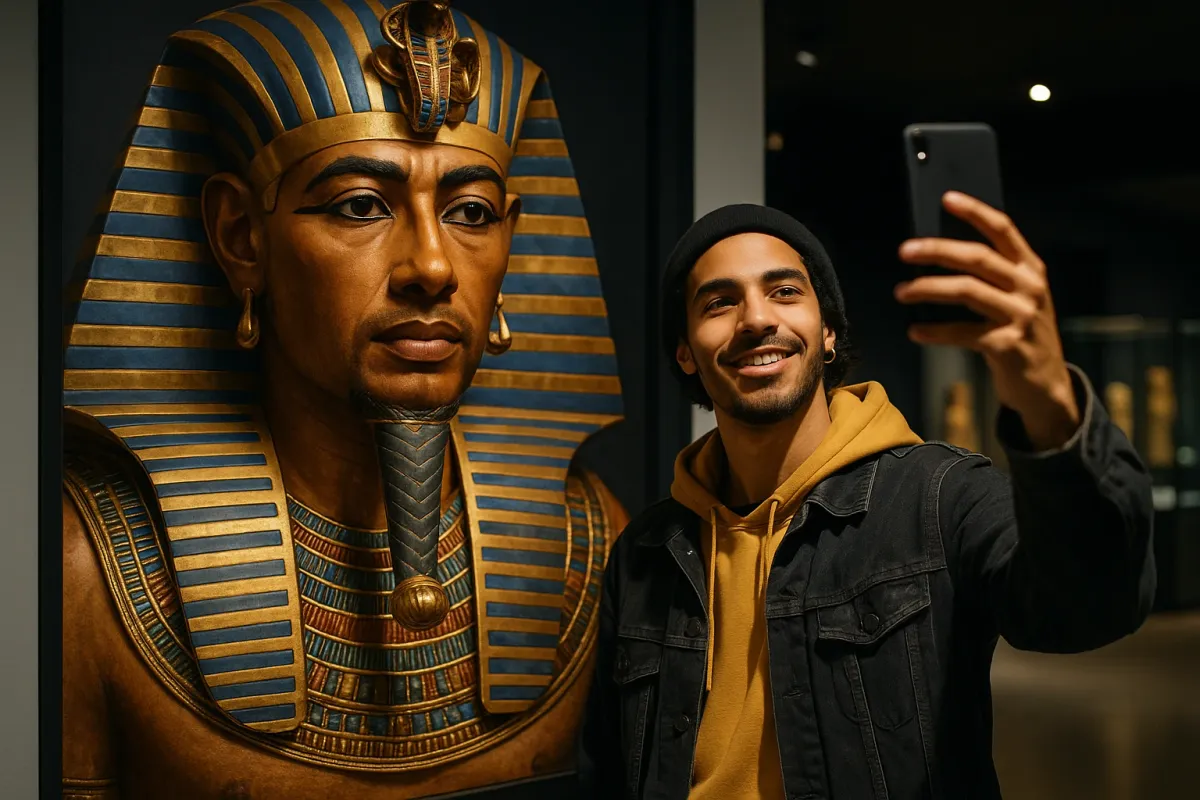
If you thought Ancient Egypt was just beige pyramids and serious dudes in eyeliner staring into the sun, today’s internet has news for you. A viral collection of eerily realistic “photos” of ancient Egyptians is doing laps around social media, making 3,000-year-old people look like they could absolutely ghost you on Tinder today.
Inspired by that trending Bored Panda piece about Egyptian images that make ancient history feel way too real, we went down a rabbit hole of weird Egypt facts. Result: the past was not only strange—it was kind of relatable, kinda unhinged, and honestly… very meme-able.
Here’s the weirdest stuff hiding behind those hyper-real ancient “snapshots” that’s turning history into a full-blown timeline scroll.
1. Ancient Egyptians Invented the Original “Face Filter”
Those hyper-real images making Egyptians look like modern influencers? Weirdly accurate vibe, because ancient Egyptians were obsessed with their appearance.
Men, women, and royalty-adjacent drama queens all wore eyeliner (kohl) not just for the aesthetic, but because they believed it protected them from eye infections and the evil eye. So yes, your smoky eye is technically medical. They also used red ochre for lipstick and blush, perfumed oils as skincare, and had wigs so fancy they’d put today’s lace fronts to shame.
Some tomb paintings even show servants fanning wigs so they wouldn’t overheat—basically the ancient version of a BTS shot from a music video. So when you see those photorealistic Egyptians online looking like they’re about to drop a skincare routine on TikTok… that’s not that far off.
2. They Loved Cats So Much They’d Probably Cancel You for Not Having One
Those modern AI-style images of Egyptians holding cats like they’re tiny gods? Historically on point. Cats weren’t just pets—they were sacred chaos floofs with legal protection.
Hurting a cat—even by accident—could get you executed. People literally shaved their eyebrows to mourn their dead cat. Not their heads. Not their beards. Their eyebrows. Imagine explaining to your boss: “Sorry I look like this, Mittens ascended to the afterlife.”
They also mummified cats, gave them fancy burials, and dedicated temples to Bastet, the cat goddess. The whole culture was basically one giant “cats > humans” subreddit, thousands of years before the internet officially confirmed it.
3. Their “Medical Charts” Were Wilder Than WebMD at 3AM
The same civilization that meticulously wrapped mummies like designer burritos also wrote medical papyri that read like a crossover between science and witchcraft.
On the science side, Egyptians stitched wounds, set broken bones, and had surprisingly detailed knowledge of anatomy (thank you, mummification). On the unhinged side, they also prescribed charms, amulets, and “magical” cures—like using moldy bread on wounds, which is oddly close to penicillin vibes… but also, no thank you.
Some surviving medical texts list diagnoses that sound like ancient WebMD: “If you see this symptom, it is a disease I will treat.” Followed by: “If you see this other symptom, it is a disease I will not treat.” Brutally honest. Imagine a doctor just looking at you and going, “Yeah… hard pass.”
So when you see those realistic images of ancient physicians circulating online, just know they might’ve been both your surgeon AND your local curse-removal guy.
4. They Were Hardcore About the Afterlife… Like, Custom-User-Settings Hardcore
Those viral “photos” showing everyday Egyptians doing normal stuff—eating, drinking, working—are extra weird once you know this: they genuinely believed your afterlife would literally be a continuation of your vibe on Earth.
They packed tombs with food, furniture, tools, games, and even tiny worker figurines (ushabti) that were supposed to come alive to do your chores in the next world. Imagine buying DLC for the afterlife. If you were rich, you basically pre-ordered the deluxe “No Manual Labor” edition of eternity.
There’s a reason so many tomb paintings show people drinking wine and partying. That wasn’t just “we like art”; it was “I would like to continue this exact energy… forever, thanks.” Those photorealistic “party pics” from Ancient Egypt? They might have literally been people curating their eternal Instagram grid.
5. Ancient “Candid Shots” Were Low-Key Propaganda
The images going viral today feel like paparazzi snaps from 1300 BCE—but the ancient artists were not just casually doodling. A lot of what we think of as “accurate depictions” were actually carefully curated PR content for kings, queens, and nobles.
Pharaohs were always taller, more buff, and more symmetrical than everyone else in art, no matter how they actually looked. Enemies were drawn tiny and pathetic. Victories were exaggerated. Battle scenes were basically the ancient equivalent of “#NoFilter” on a heavily filtered selfie.
So when modern tech turns these paintings and sculptures into realistic faces, we’re kind of seeing history through an ancient Photoshop filter. That jacked pharaoh staring dramatically into the distance in your feed? He might’ve been five-foot-six with back problems. The propaganda department just had a killer art team.
Conclusion
Those hyper-real ancient Egyptian images trending right now are doing more than freaking everyone out—they’re making us realize how bizarrely similar we are to people who lived thousands of years ago.
They curated their image, obsessed over pets, overshared their beliefs, beautified everything, and even used art as propaganda. Basically, Ancient Egypt was running a 24/7 aesthetic, spiritual, and PR campaign… they just didn’t have Wi-Fi.
So the next time one of those uncanny “photos” slides into your timeline and you think, “Why does this 3,000-year-old guy look like he DJs on weekends?”, remember: history is just the world’s longest-running content feed.
And those ancient Egyptians? They were absolutely posting for the afterlife.